Why Do I Keep Replaying Cartoon Cartoon Summer Resort?
I have an idea of what my first memory playing Cartoon Cartoon Summer Resort should look like.

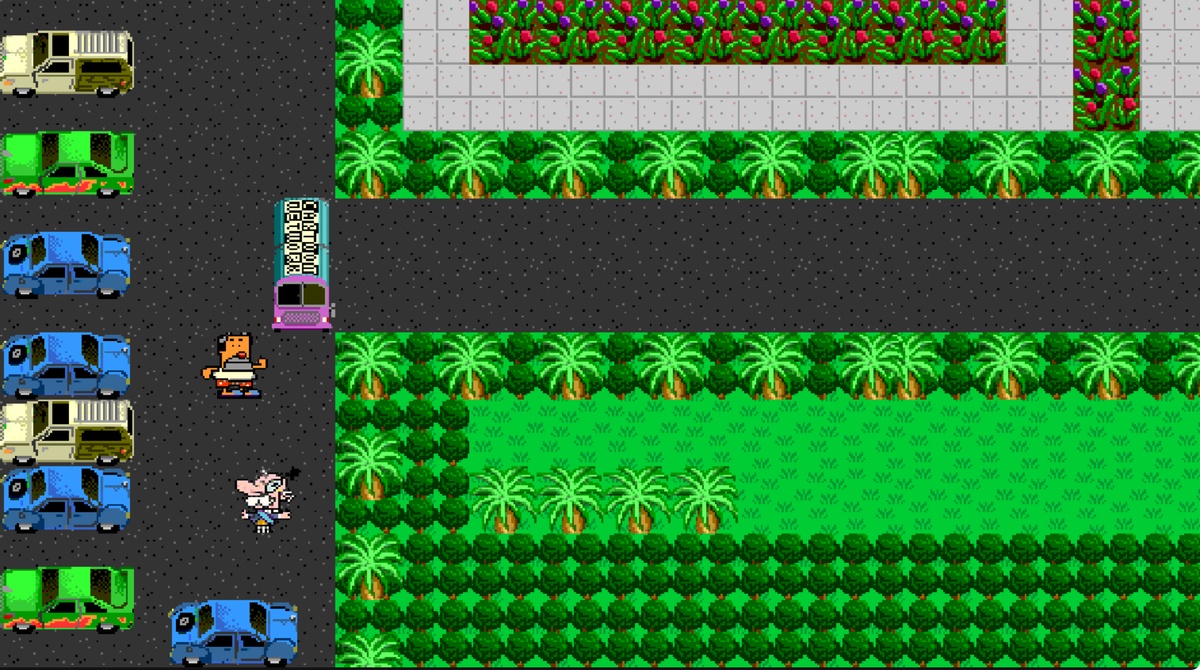
I have an idea of what my first memory playing Cartoon Cartoon Summer Resort should look like. I’m young, past five but not quite ten years old, and posted up too close to my family’s old computer. It’s a summer day, the kind where the heat is blurring my front lawn. I’m scrolling through the official Cartoon Network website’s games section and come across a name I think is a mistake, given that not even the network name features “Cartoon” twice. Regardless, I’m intrigued by the fact that, amid a sea of familiar animals, humans, and other creatures of animators’ imaginations, there’s a random man in a white undershirt acting as the cover for a children’s game. Finally, I hit play.
But again, that’s an idea. The actual memory is long gone. Now, I don’t mind forgetting the first time I played a random web browser game from the 2000s. Memories are loose things, meant to fall away over time as naturally and subtly as strands of hair, noticeably gone only once the shed clump of curls is large enough. What’s really come to bother me is why I keep replaying the game. There have been enough times where the rose-colored glasses have fallen off and I’ve mostly seen the game for what it is. And frankly, Cartoon Cartoon Summer Resort is not a great game. I’m not even sure it’s a good one.
Cartoon Cartoon Summer Resort is a four-chapter, fetch-quest RPG that cashes in on the same nostalgia and warm feelings that sell toys, clothes, and all other manners of paraphernalia to children. Except, in this case, the necessary currency is time instead of money. It’s a game full to the brim with Cartoon Network characters that have made me laugh and cry, but here they are cameos where just the tip of their personalities are seen. It’s a game with a singular song that is hypnotic and memorable in the same way a close friend’s barely tolerable singing is. This song is often interrupted by the loudest bonk noise on Earth, which is triggered any time the player bumps into another in-game asset. All of this is experienced as you run back and forth on iterations of the same single map throughout each chapter. Using the same layout does have the benefit of saving time and therefore money, plus makes it easy for anyone to jump back in should they take a break between chapters, but it does not offset the desire to see more new things. In several ways, it’s a blessing that the whole game can be finished in less than 2 hours. Cartoon Cartoon Summer Resort, at best, is okay.
Yet, I’ve replayed it several times now. It’s no longer available in its original form, but has been preserved over time in various ways, like the Flashpoint Archive. I’m not sure why I keep replaying such a “just alright” game, even going out of my way to emulate it now that both Flash and Cartoon Network’s website have met their unceremonious demise. I have multiple theories: perhaps there is some X-factor, or maybe it says something meaningful about the early 2000s internet. What’s increasingly become clear is that, rather than a single static reason to motivate me, there's likely a web of momentarily fitting ones. As time has passed, I’ve started looking more closely at some of these theories so I can better understand why Cartoon Cartoon Summer Resort continues to stick with me.
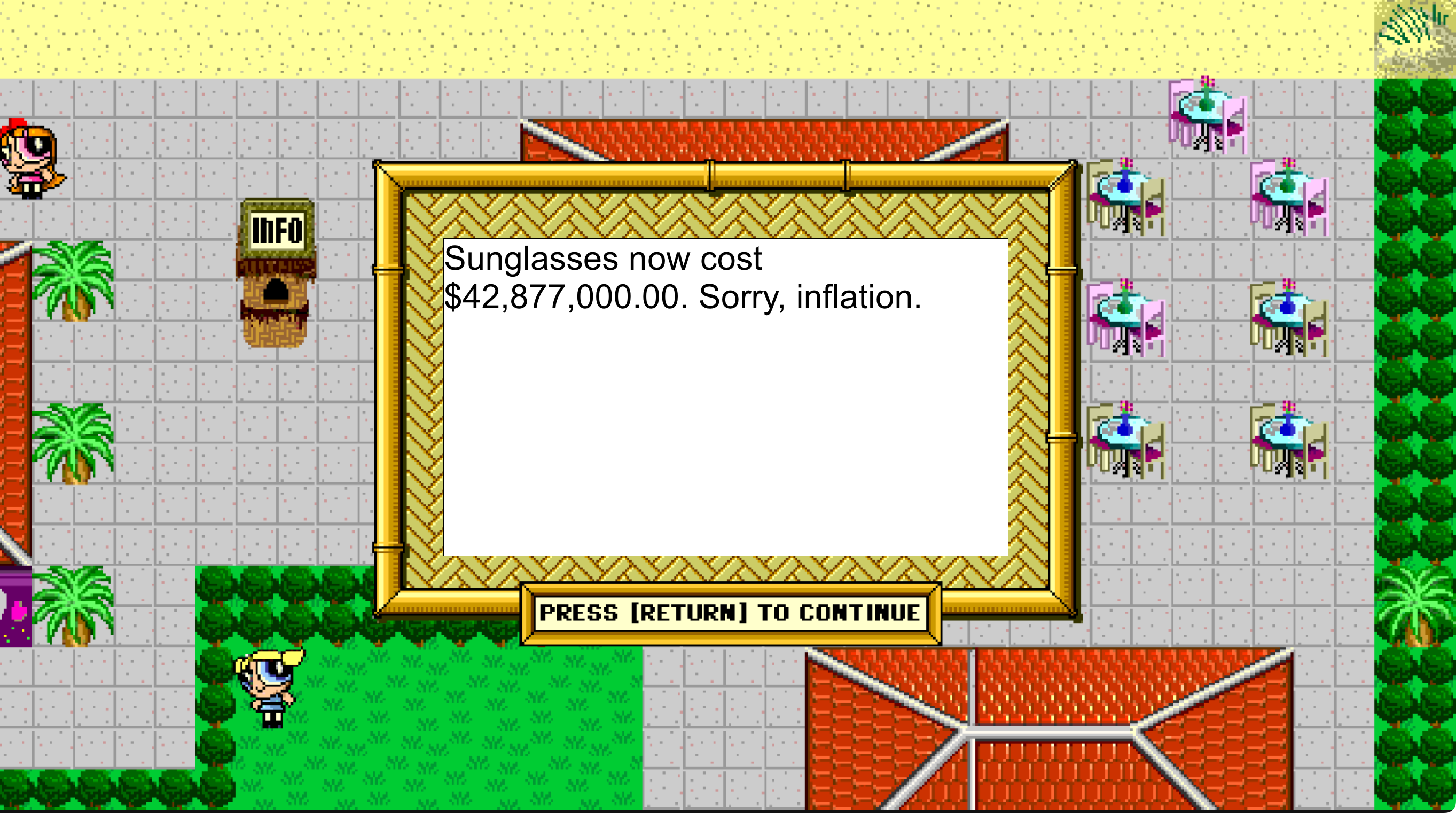
Despite my earlier critiques, Cartoon Cartoon Summer Resort is undeniably charming. It’s unapologetically absurd in a genuinely humorous way. The game asks the player to stop Dexter’s rampaging tennis robot one chapter, and then tells them to save cowardly Courage from an erupting volcano the next. In line with this zaniness, the developers sprinkled dumb jokes throughout the game that hold up even without previous knowledge of Cartoon Network’s shows. My favorite is that sunglasses go from free to $42,877,000.00 in between chapters, with the only explanation being “Sorry, inflation.” The whole game seems deeply aware of both its intended audience, which is children looking for something familiar with which to pass the time, and itself, a shoestring-budget web browser game that can be finished within a child’s small attention span. This self-awareness allows it to drop all pretenses and just get weird, an attitude I’ll always appreciate even if the execution is lacking.
However, charmingly weird only goes so far without being supported by quality, so maybe it’s the social element of Cartoon Cartoon Summer Resort that draws me back. While the game isn’t multiplayer, it has been responsible for helping forge and deepen relationships with several people my age. The power of seeing recognition enter someone’s eyes when I say or describe Cartoon Cartoon Summer Resort should not be underestimated. It’s not just about finding a commonality between two people — it often becomes the first step in a conversation that will later feature “You remember that TV show, too?!” and “You just unlocked a memory for me!” and “I can’t believe someone else still thinks about that!”
The game reeks of its own time, which has its frustrating drawbacks, but does allow it to be a great tool for finding people who also experienced that small moment in history. It has even brought me to those who are still building that history, as knowing about this game helped me learn about its improved remake, which subsequently helped me find the remake's creator. He turned out to be a kindred spirit when it came to doing something with memories that won’t leave him alone. While there’s advantages to the forever games today that, if they stick around long enough, can even let a parent share some memories with their kid, being able to remember the same thought-to-be-forgotten game has been a cheat code to bonding with others.
Then again, I’ve had tons of conversations with people my age where I’m the only one who remembers, or even knows, the game and its bonks. So what if I’m replaying Cartoon Cartoon Summer Resort not because of its charm or its use as a social glue, but instead because of the time it came from? After all, the internet and video games are in a wildly different place from the space I’m grasping at in my memories.
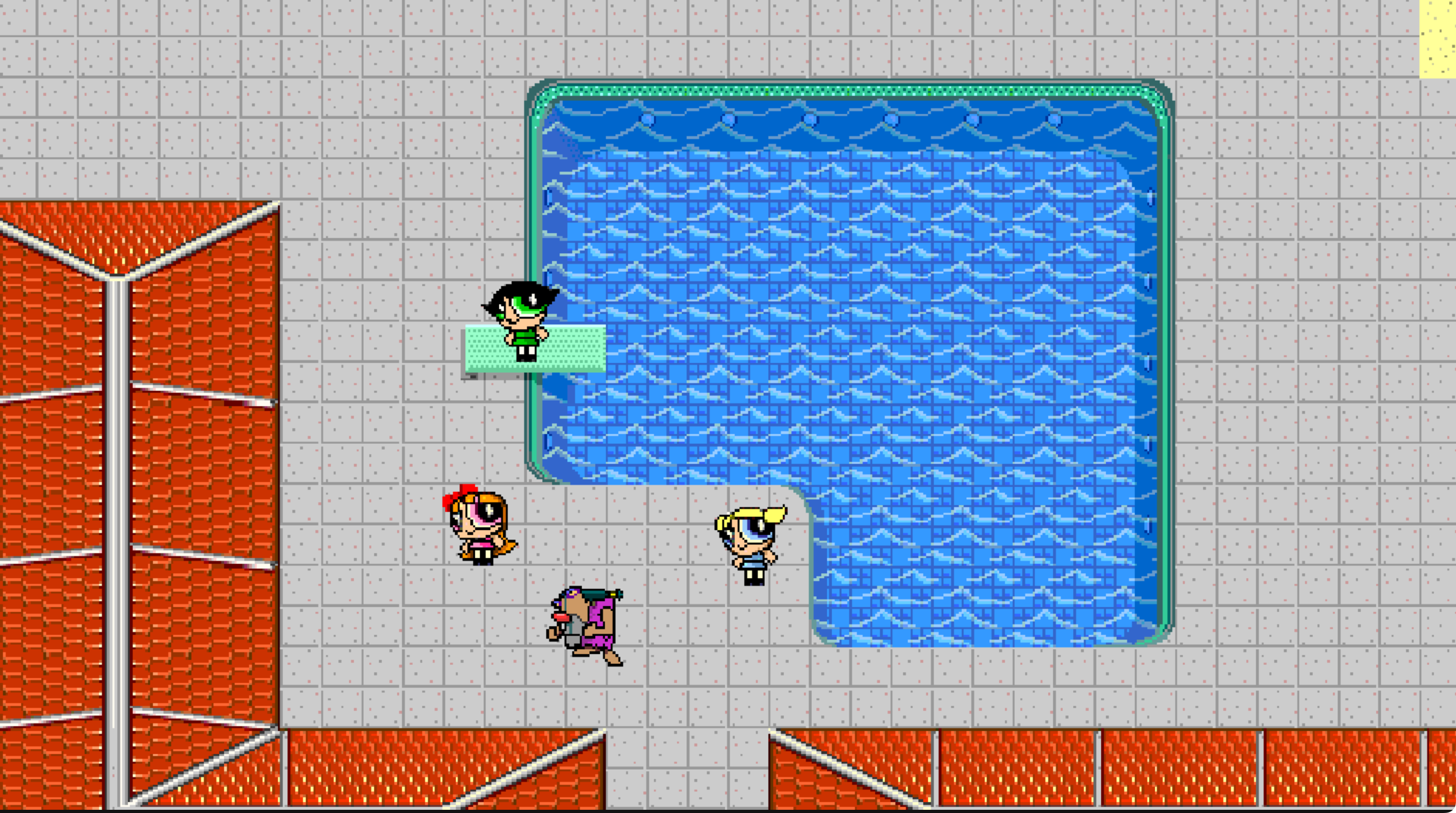
Today, it’s hard to find a free-to-play game that doesn’t come with a gacha system caveat. In fact, it’s difficult to look anywhere and not see some form of gambling targeted at young people. Many, if not most, children are not scouring the game sections of TV networks’ websites, but instead keeping up with Roblox and its litany of user-generated games that now require age verification via facial recognition to access in some parts of the world. The current cartoonnetwork.com doesn’t even lead you to a website where you can easily find a games section (like this imperfectly preserved webpage), but instead directs you to a section of HBO Max’s website featuring Cartoon Network shows and a prompt stating, “Plans start at $9.99/month.”
All these examples circle the same suspicion: that the conditions which allowed for a game like Cartoon Cartoon Summer Resort to not only be made as it was, but even have a modicum of popularity, are hard to replicate today. While sentimentality certainly colors my remembrance of the past, I can’t help but think that even from a more objective vantage point, the internet has never seemed more full of (and okay with) the predatory behaviors my parents raised me to be wary of. The internet was far from perfect back in the early 2000s, but at least I could go through a few links without seeing a price tag or needing to create an account. I’m not even sure if my mother would’ve allowed me to play Roblox as a kid if she knew that sharing my face was a requirement, regardless of the platform’s reasoning or my protests. With that in mind, Cartoon Cartoon Summer Resort becomes more than a fond memory, but also an example of a time where many games on the internet had a fundamentally different relationship with kids — one that wasn’t looking to drain their time or money forever.
My visits to Cartoon Cartoon Summer Resort could be due to fatigue from blatant opportunism that targets kids by accident and function. Or it could be any combination of the reasons I explored above. Truthfully, there are probably as many reasons I’ve replayed the game as there are times I’ve played it. Webs can be gigantic, often further entrapping those that try to navigate or escape them. With all this in mind, there are only two things I can call facts instead of theories. The first is that I’ll play Cartoon Cartoon Summer Resort again. The second is that any reason for doing so, in some way or another, goes back to that first time I played the game. And maybe, despite my initial thinking, that’s what it’s all about. Knowing that I can’t return to a forgotten memory, even knowing that I don’t mind this part of the human experience, I’m trying my best to realize a satisfactory idea of that memory — an idea that could still be useful today.