I need Kazuma Kiryu to die. I think he needs it too.
Of course, as true as the sky over Okinawa is blue, Kiryu died in the final moments of his swan song, Yakuza 6: The Song of Life (2016). When director Toshihiro Nagoshi told Famitsu (via an English translation published by Yakuza Fan), “I’m not lying when I say that this is the final chapter of Kazuma Kiryu, however. Those are my true beliefs right at this moment,” why wouldn’t he have been telling the truth? It had been the year of the dragon for eleven straight, after all. The poor old man’s tired.
Kiryu’s death plays out in a maelstrom of blood, bullets, and self-sacrifice. With the elderly, infantile Iwami knocked down, his spineless subordinate Sugai seizes the opportunity to take aim at Haruto, a literal goddamn baby. His mother, Haruka, reacts instantly, turning her body to act as a human shield for her son. Yuta takes his position in front of her as Haruto’s father, spreading his wingspan as wide as he can to take the bullet in his family’s stead. He’s a fool, though — he’s in the same scene as Kazuma Kiryu, who knows his time is up. Generations of this found family stand in line, with only the eldest struck by lead: taking the fall for others, whether they ask him to or not. As the gunfire comes to an end, Iwami and Sugai give up, with Sugai holding a barrel below his jaw and making the best use of a bullet in the whole scene. Kiryu’s lifeless body drops into Yuta’s arms. The screen fades to black. A family survived; a dragon slayed.
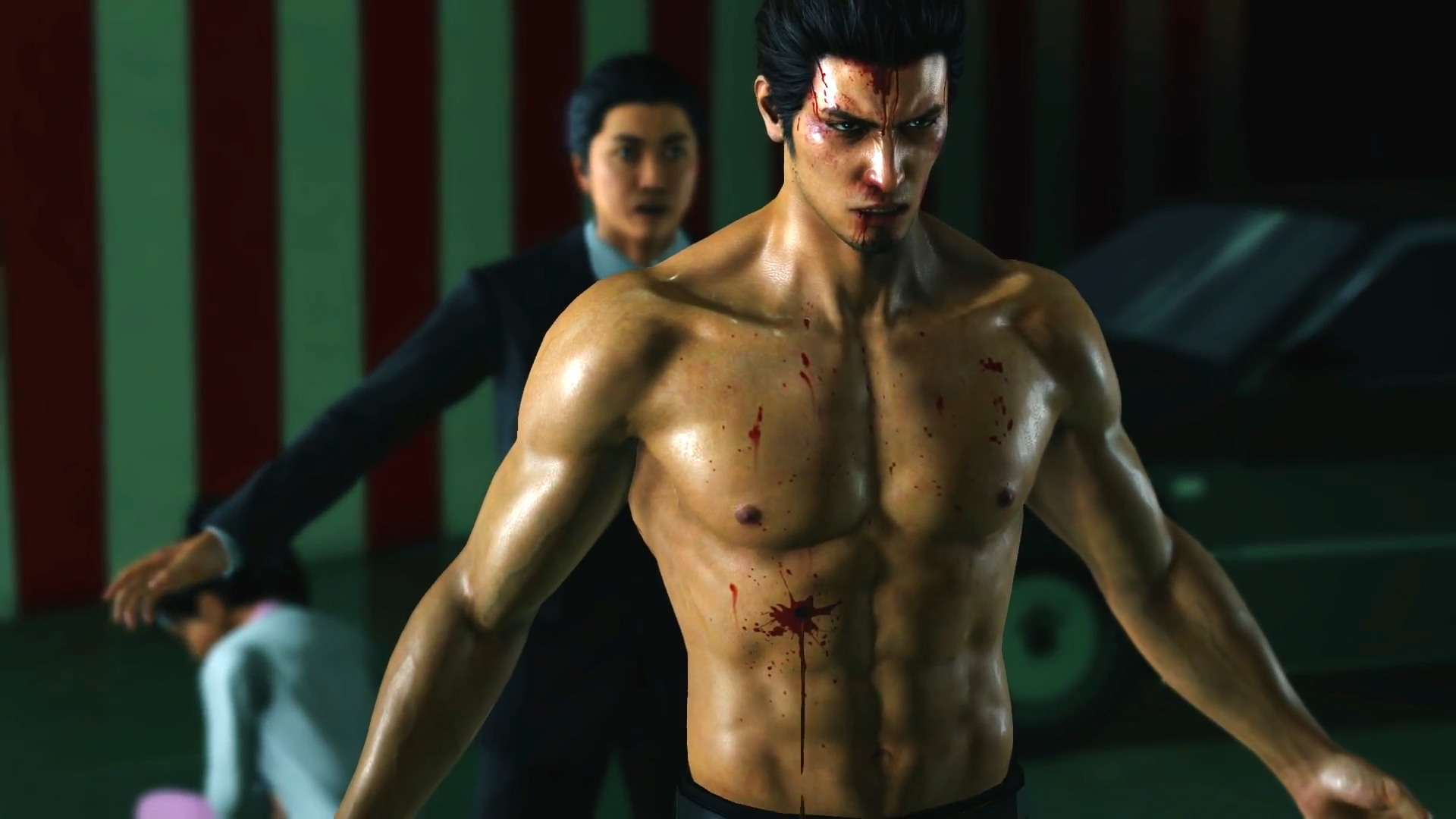
Kiryu’s family mourns him. His lifelong friends don’t want to believe he’s really gone — partly out of denial, partly because Kiryu has “died” before, be it in the open streets of Kamurocho or the snow-covered outskirts of the Tojo Clan headquarters. And there’s a short period in the epilogue where you might actually believe what Nagoshi insisted: that really, he’s gone this time. We promise.
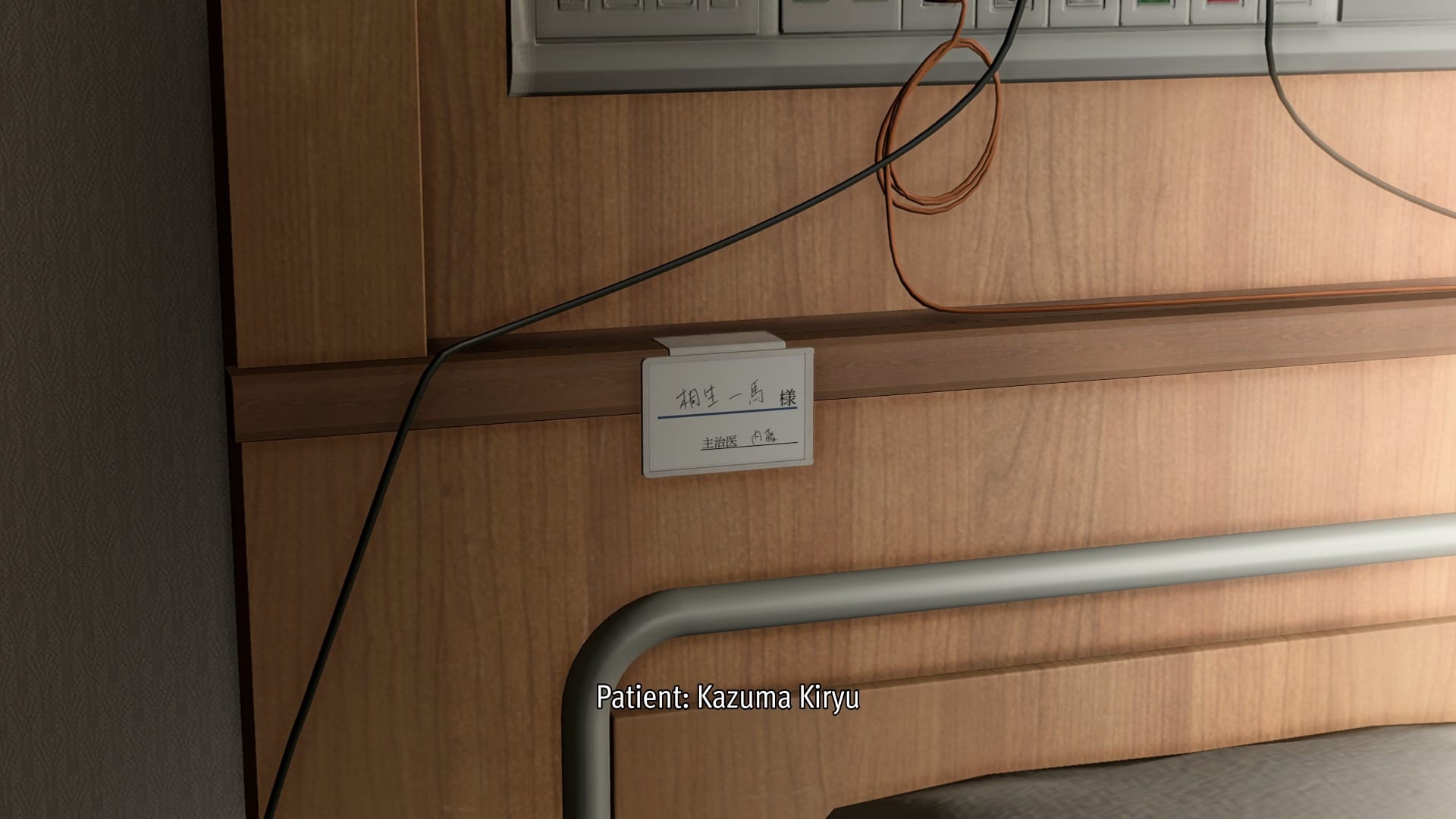
Anyway, Kiryu wakes up in a hospital bed in the epilogue, seemingly unaffected by several bullet wounds. A politician, representing the shadowy Daidoji group, offers him hush money to keep quiet about what happened in Onomichi for fear of a governmental scandal. He flat out refuses, but doesn’t just get up and walk out of the room. He requests to die. Not to end his life, which he has miraculously clung onto, but to become a ghost — to tell the world that Kazuma Kiryu is no more.
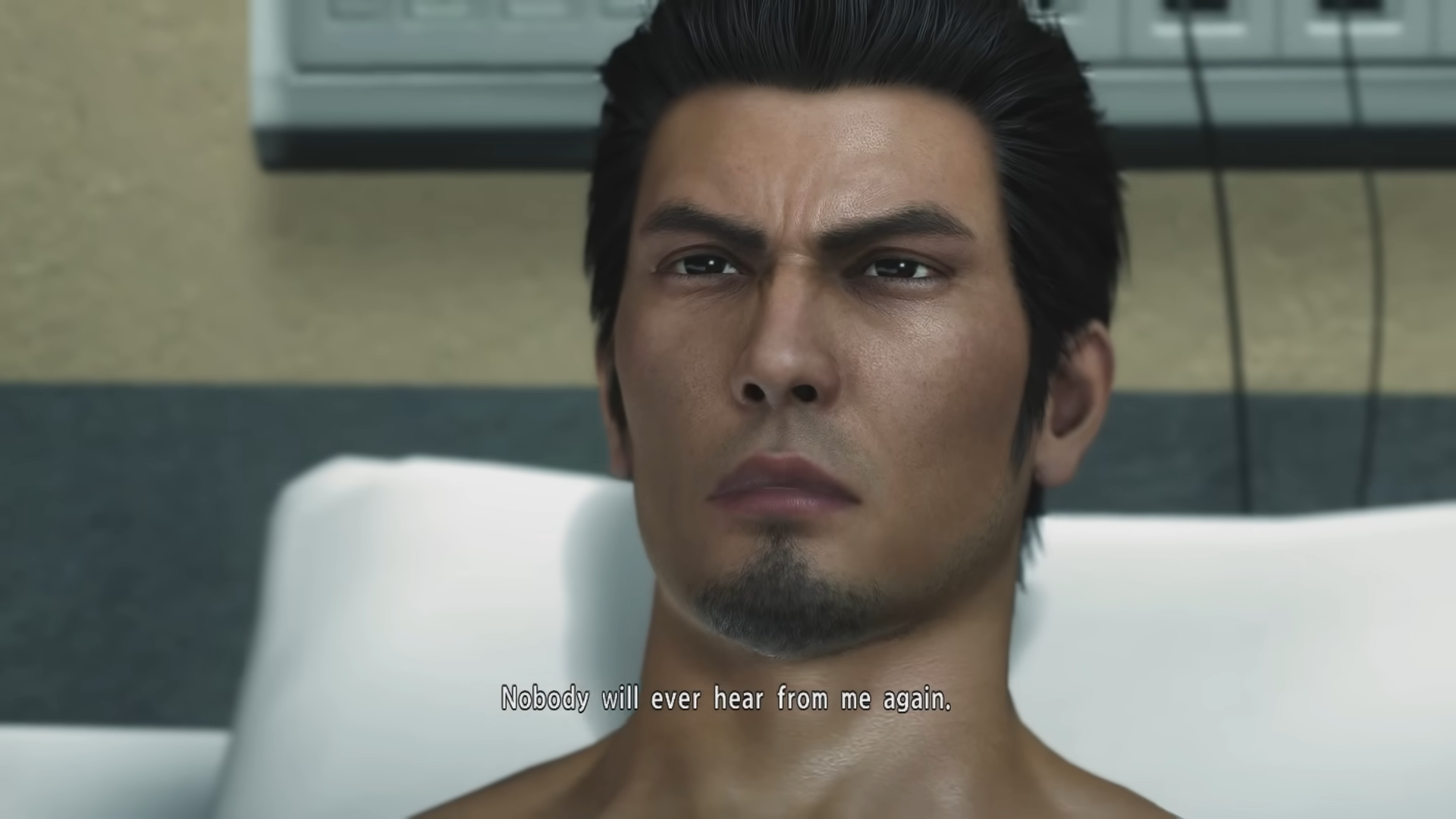
It's a choice that seems incomprehensible, but it is perfectly in character for him. He's been waiting to die for the sake of his loved ones for about half a century, and has sacrificed himself more times than the Clan has had chairmen. Of course he would choose “death.” He’s spent years convincing himself that his existence is inherently a burden on and danger to others, that forming connections with anyone means suffering and death inevitably follow in his wake. And there might be a precedent for that — his father, brother, daughter, friends, rivals, and enemies have frequently faced strife, or even death, that reached them due to their proximity. He says as much while justifying his decision to himself, staring up at the cold ceiling of the ward: “If it means keeping them safe, I’d gladly give my life.” Self-sacrifice has become a Promethean exercise; he’s faced heartbreak after heartbreak, loss after loss, torture after torture for trying to save the lives of those he loves. Kiryu's chest is ripped open by the hungry beak of his past ad infinitum, and all he can do is grit his teeth. It’s what he’s supposed to do. It’s the right thing to do. It’s his purgatory, and there seems to be only one way out.
But then, if his choices, his past, his legacy, continue to have consequences on those he loves, shouldn’t he be around to help them through it all? What he views as a noble self-sacrifice, the only option to keep them safe, also leaves a gaping hole in their lives. Haruka returns to Kiryu’s orphanage, burdened with the responsibility of not just telling these children that their father is dead, but to raise them without his support.
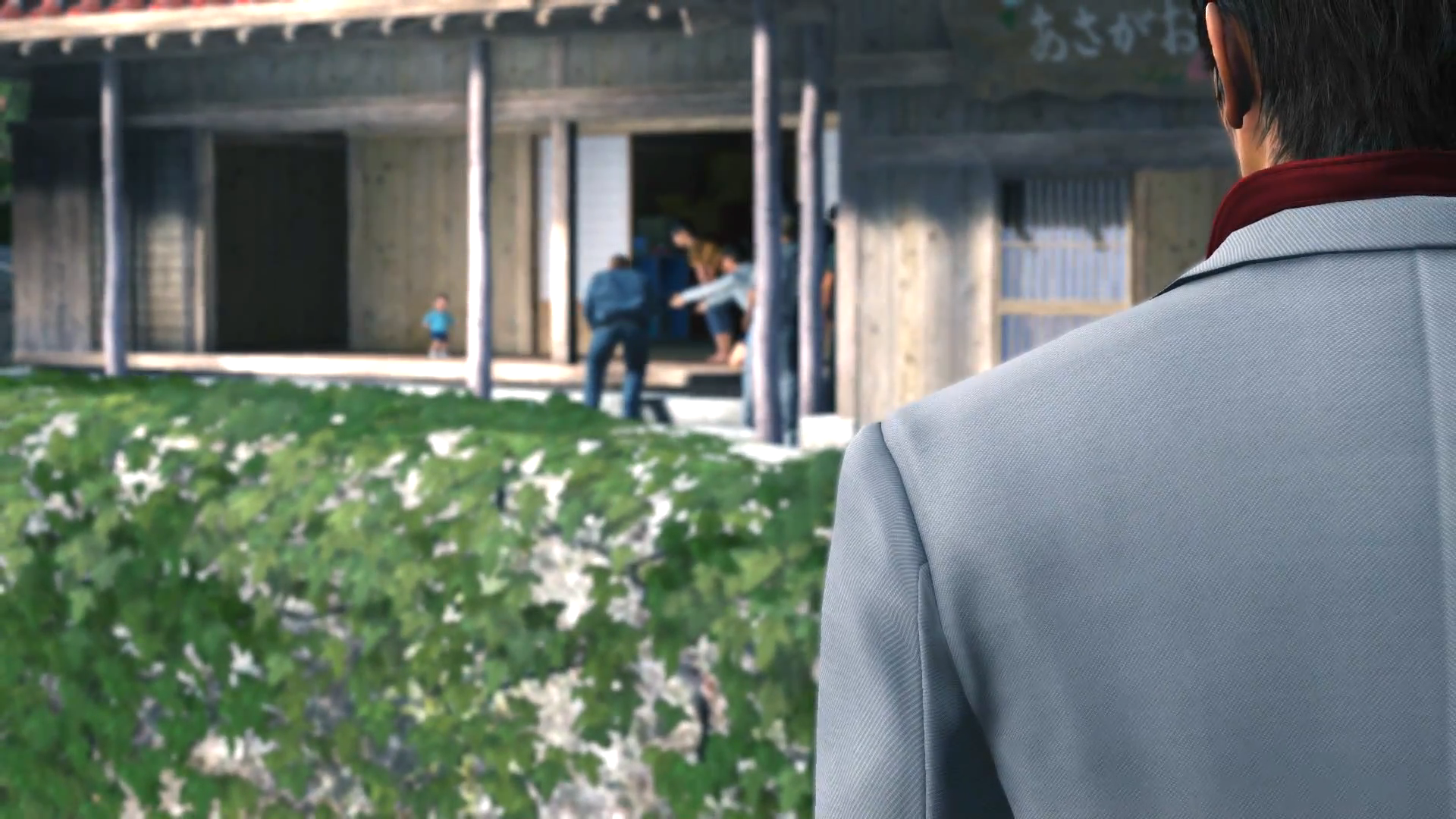
On the creaking floors of Morning Glory, Haruto rises, walking for the first time toward his mother’s encouraging, open arms.
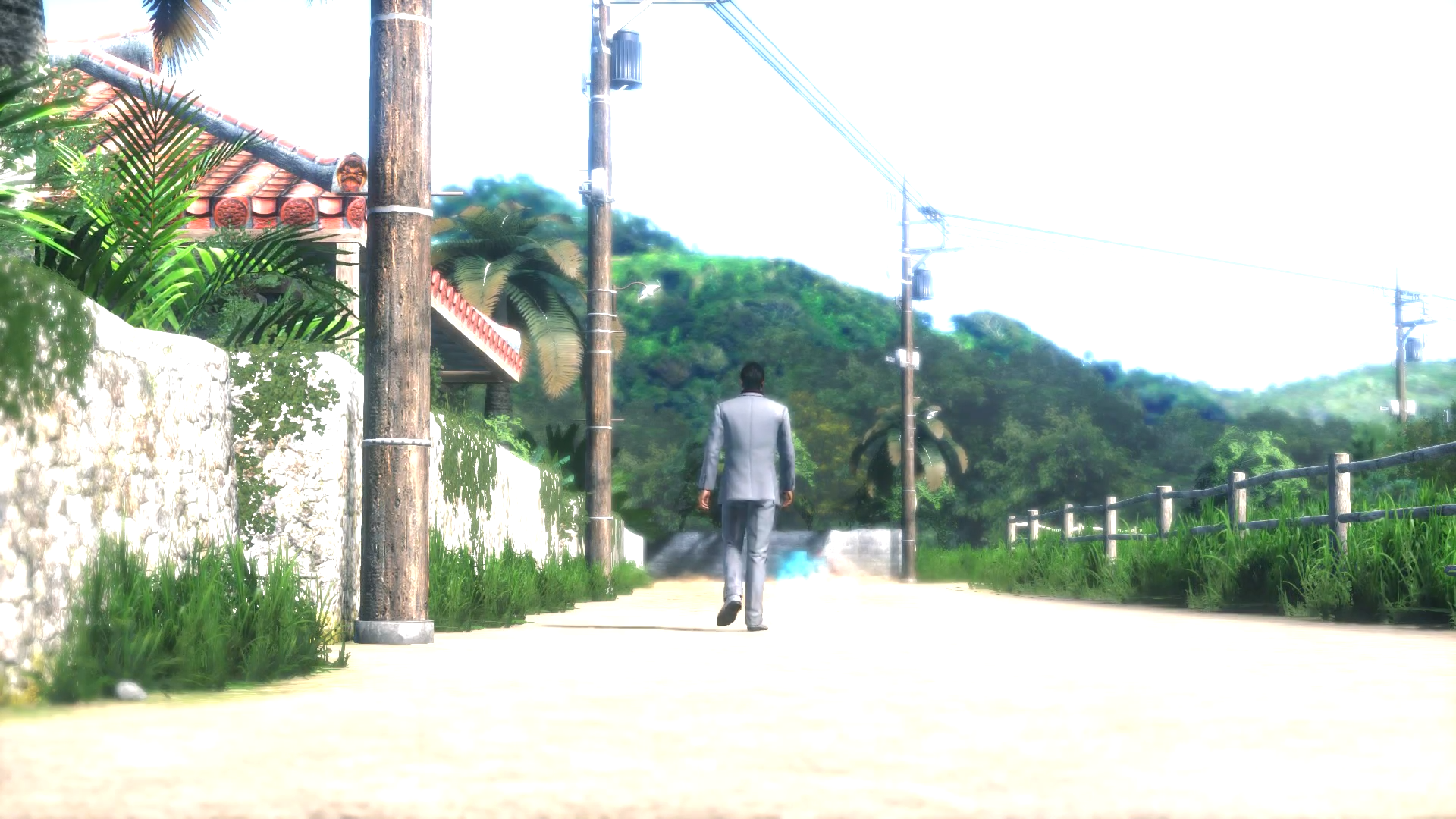
On the white sands of the Okinawan coastline, just meters from his grandson but a world apart, Kiryu walks away for the last time.
It’s not good, for him or for his loved ones, but it’s the only ending he would ever choose. It’s his.
There was a beautiful, fleeting moment in the years following Yakuza 6 where it seemed as though, despite Kiryu being kept somewhere between life and death, he was granted his wish. Judgment (2018) kept the brawling in Kamurocho but introduced an entirely new lead and cast disconnected from the main series, with protagonist Takayuki Yagami’s closest tie to the previous releases being just an awareness of the Tojo’s existence. This was followed by the announcement of Yakuza: Like A Dragon (2020), developed under the codename Shin Ryu ga Gotoku, i.e. “new Like a Dragon”: a new protagonist and new start. With a shift to turn-based combat and a new lead in Ichiban Kasuga, a yakuza with a heart of gold (sometimes to a fault) — the complete inverse of Kiryu in both color scheme and outlook — the hero of tomorrow represented an entirely new direction for the series. Both Kiryu and Kasuga sport back tattoos that reference the Chinese myth of the Longmen, a carp transforming into a dragon after a grueling swim up a waterfall, symbolizing endless determination. Thus, Kasuga’s ryugyo tattoo wasn’t just for show. He had a long path ahead of him to become a dragon, and we’d be witness to his journey to rise up and be the strongest hero in the world, just like in Dragon Quest. While Kiryu had long since transformed from a carp to a dragon, Kasuga was still struggling up the waterfall.
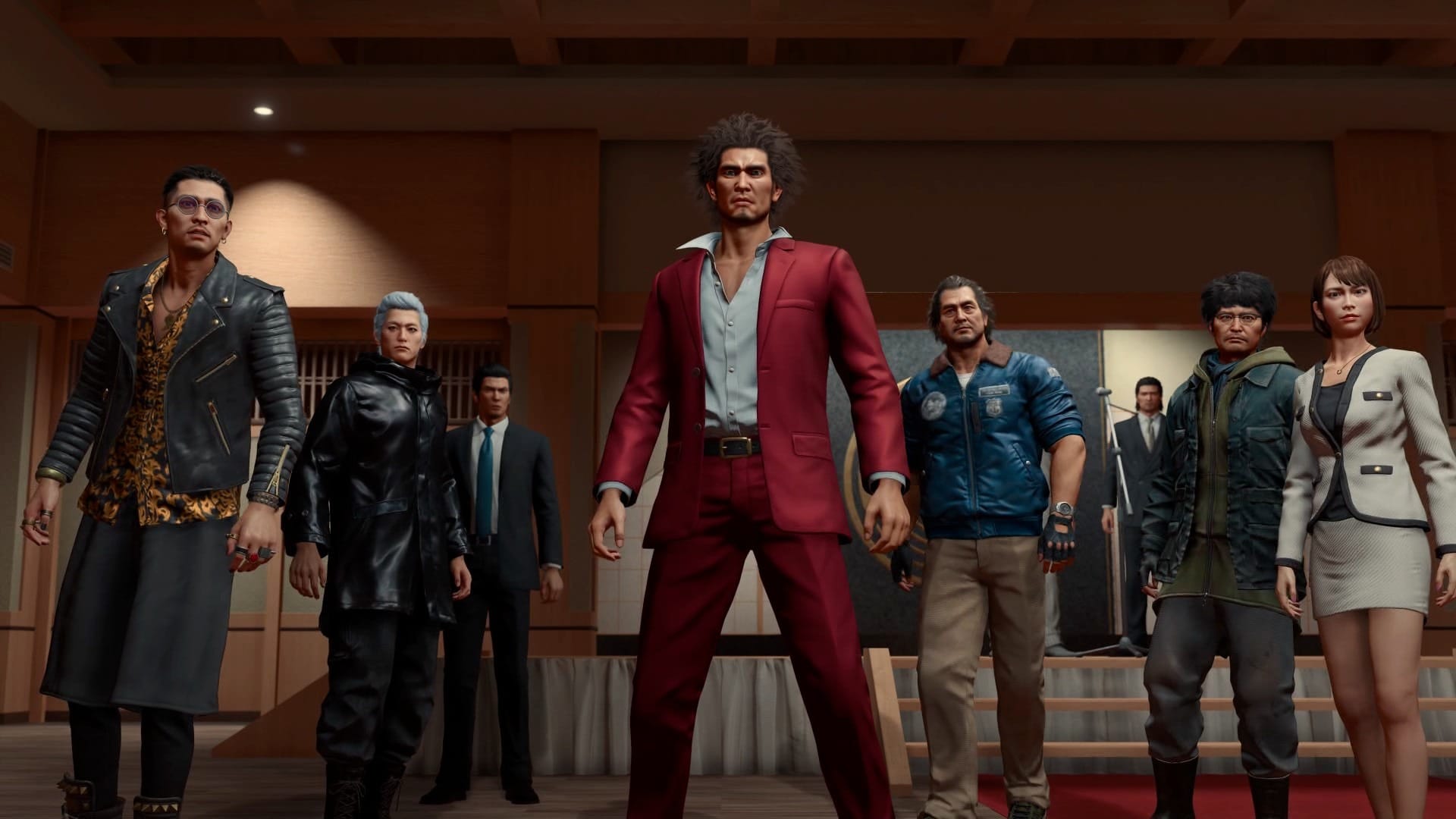
Kiryu does make an appearance in Kasuga’s first adventure, but it’s a brief cameo to pass the torch. Kasuga doesn’t even know who he is, just that he’s an ally protecting him at the clans’ dissolution before eventually becoming the wise dragon blocking his path. He doesn’t overstay his welcome, serving his purpose in the narrative as the old guard entrusting the (slightly) younger generation with doing the right thing amongst a sea of criminals that don’t share their heart. But Kiryu doesn’t force his own ideals on Kasuga — unless you count “don’t outright kill grunts in a blood-fueled rage for the crimes of another” as a Kiryu-specific ethos. He doesn’t appear again after fulfilling the necessary “new vs. old protagonist” boss fight quota (during a chapter literally called “Passing The Torch”). Kasuga’s arc does not involve Kiryu, and Yakuza: Like a Dragon closes with the new dragon looking forward with hope, unburdened by the previous age of the yakuza now that they’ve been and gone.
Anyway, Kiryu got another game to his name after all. Or, sorry, not his name — he’s called Joryu now, apparently. Like a Dragon Gaiden: The Man Who Erased His Name (2023) is a side story with a very long title and a very confused purpose. Not content with just that cameo, Gaiden sees developer Ryu Ga Gotoku Studio (RGG) expand unnecessarily on what Kiryu has been up to since his “death,” the answer to which is inexplicably ‘“some James Bond shit.” On a short leash as the Daidoji’s loyal dog, Kiryu goes undercover as “Agent Joryu,” a name which surely makes him unrecognizable despite the only difference in his appearance being a costume switch from a dated gray suit to a sleek black one paired with some Clark Kent glasses.
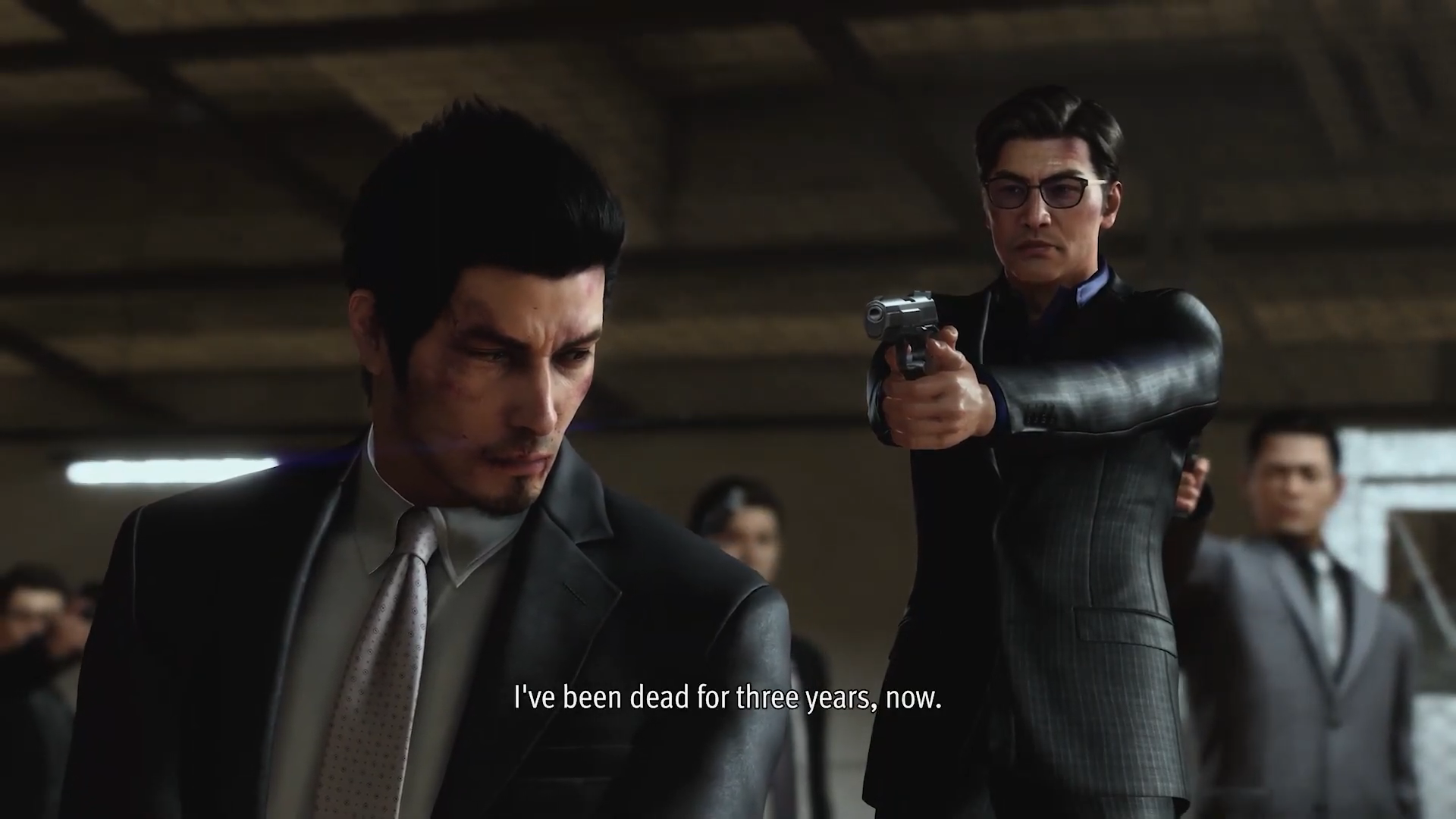
During the game’s short runtime, he takes part in black ops missions for the Daidoji in return for them not murdering his kids, fights a coliseum cosplayer of himself, and gets involved in a yakuza power conflict that threatens the heads of the Tojo and Omi, and…wait, really?
This is what we’re fucking doing? RGG, you brought Kiryu back for the second time since his swan song, in a full game to himself no less, and he’s just cleaning up the scraps of the clan dissolution while collared by the Citizens’ Liberal Party’s shadow intelligence force? This is what the Dragon has been reduced to — caretaker to the petulant children of the Tojo for the umpteenth time? It’s as if this entire game exists just to make the dissolution fight featured in Yakuza: Like a Dragon playable from Kiryu’s perspective. Gaiden has no reason to exist other than a desperate attempt to cling onto the past. A cinematic final fight against Shishido — himself a prime example of wasted potential — and an admittedly touching ending demonstrating Kiryu’s love for his children isn’t enough. It’s seven to ten hours of Kiryu, and RGG, just doing what they always have.
In my previous writing on Gaiden, published shortly after its release, I noted my dismay at Kiryu’s return to the limelight: “The times have moved on, leaving the traditions of organized crime a relic of a bygone age ... yet here stands Gaiden — hypocritical of its own themes. The times have moved past Kazuma Kiryu’s long and painful life.” If Gaiden was Kiryu’s final appearance, an epilogue to his ending, I could just about stomach it. But of course, Gaiden’s announcement was a double feature, as the same preview showcase also featured a teaser for Like a Dragon: Infinite Wealth (2024). Kasuga walking down Tenkaichi Street! A followup to cement him as the protagonist going forward! Voices of his party members — wait, oh my god, is that fucking Kiryu next to him? “Guess we don’t have a choice,” he says, apparently acting as a mouthpiece for RGG’s approach to this series’ leading men.
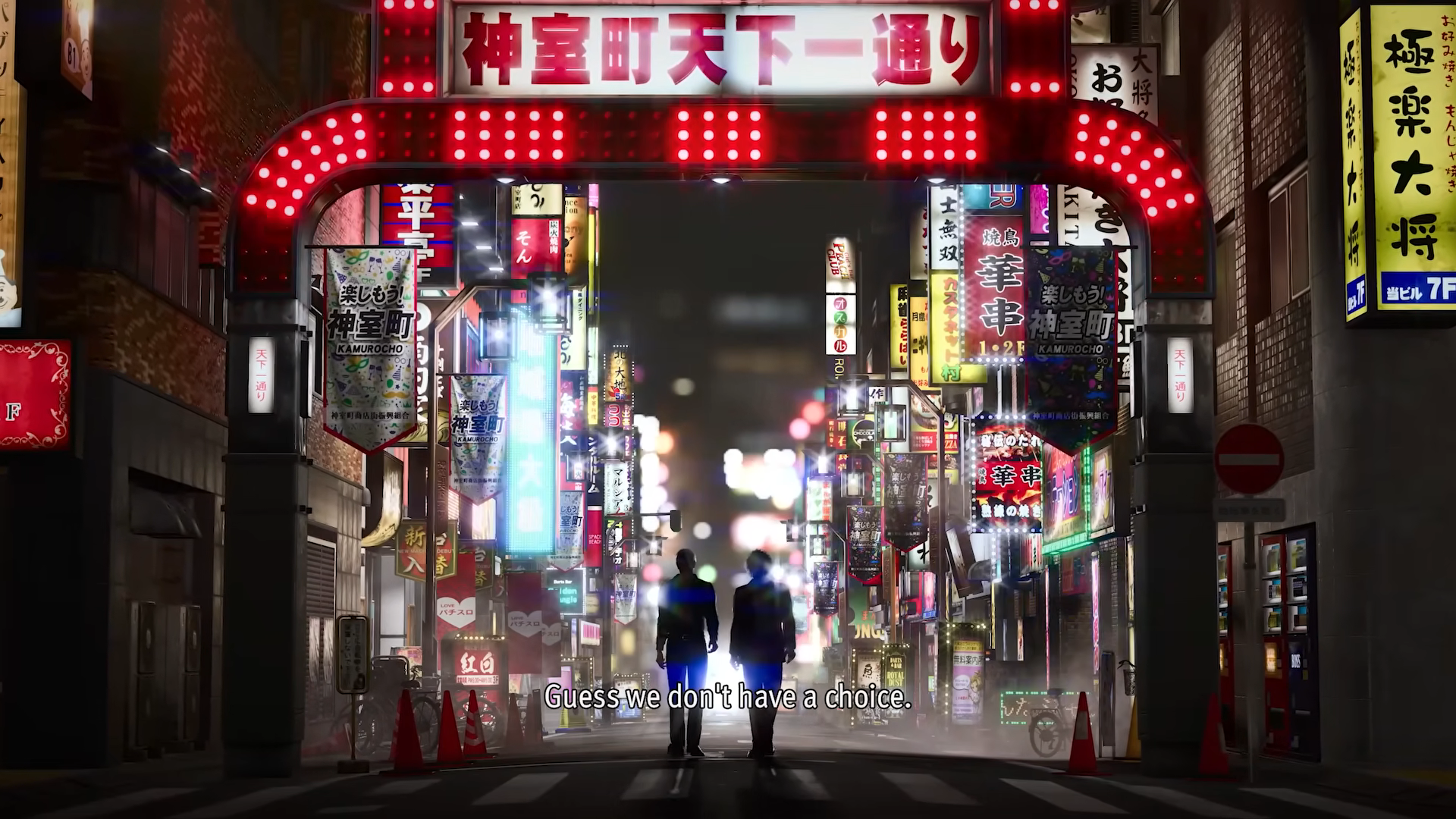
Gaiden’s cliffhanger ending, which served just as an excuse to jet Kiryu off to Hawaii for Infinite Wealth, put a bad taste in my mouth. At the time, my concern regarding Kasuga being forced to share the spotlight in the upcoming Infinite Wealth, ostensibly his own sequel story, was just worried conjecture. There was a chance Kiryu acted as only a mentor to him. Finally having some semblance of age affecting his body could have led to RGG making the old man take a backseat from the front line for once. Alas, how horribly right I was to be concerned. Despite being Kasuga’s sophomore feature and a dual-protagonist story, Infinite Wealth is ultimately, infuriatingly, a game about Kiryu.
As with Yakuza 6, Infinite Wealth is a game focused on the death of Kazuma Kiryu. Rather than a final cutscene gunshot volley, though, this time it’s a slightly more subtle, dare I say realistic way to slay a dragon: Kiryu has cancer. How it has developed is irrelevant, as much as the story hilariously tries to explain it’s due to a short stint working in a radioactive material dump rather than the forty-something years of chainsmoking preceding this story. He has a few months to live, and a lot of responsibilities to take care of in that time. Oh, and he’s refusing chemotherapy — he’s apparently been told it’s untreatable, and he’s accepted that without question. Despite being the most stubborn man on the planet, Kiryu just really, really wants to actually die this time.
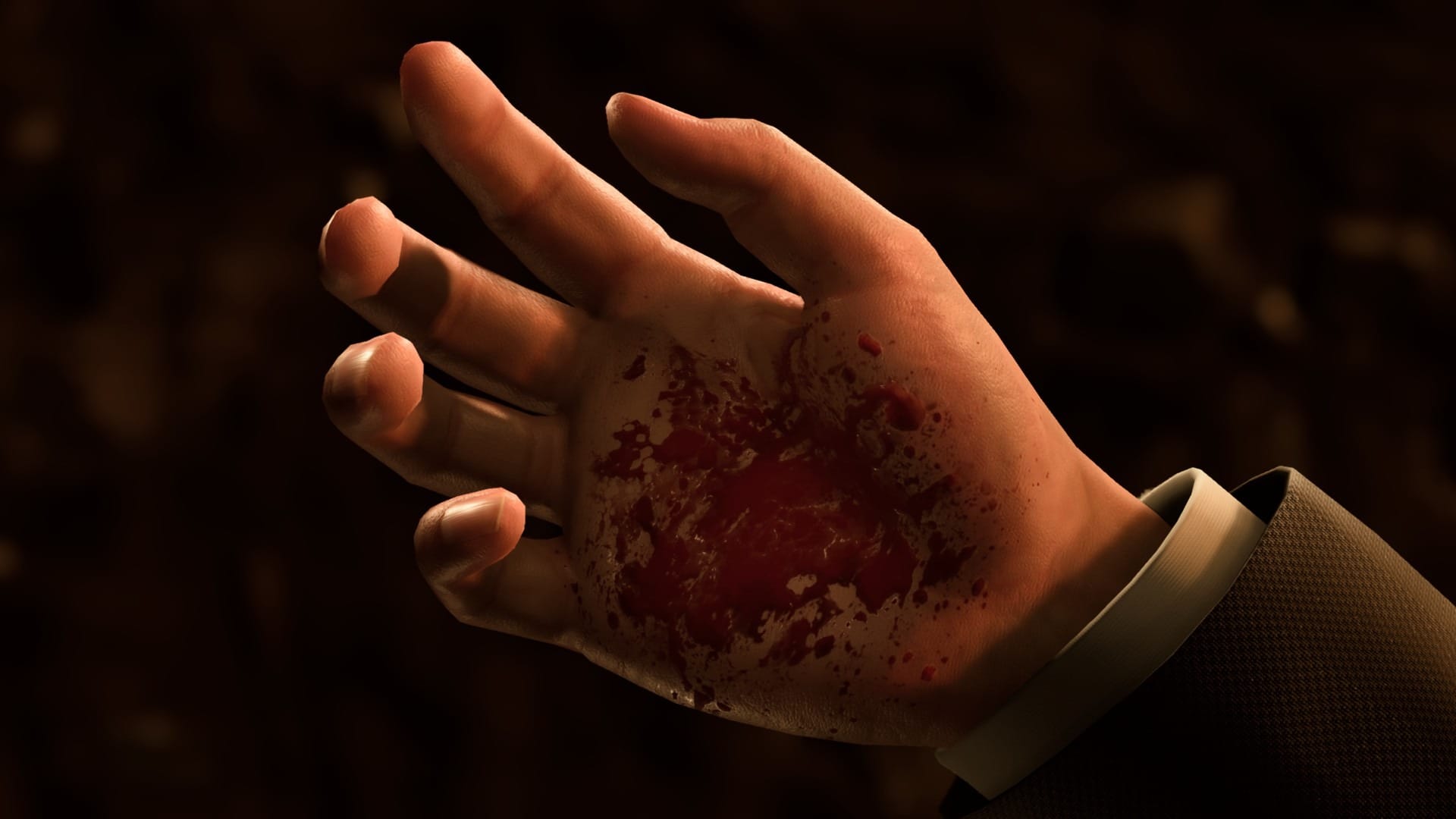
Sure, there’s the actual plot, a messy affair featuring even more consequences born from the yakuza’s dissolution that takes Kasuga and Kiryu to Hawaii for separate reasons, but what matters here is what Kiryu will do with his last few months on earth. Initially accepting his fate to die like a dog under the Daidoji, coughing up blood while protecting the party with his increasingly haggard body, he eventually learns to listen to what his loved ones have been telling him for years: live for yourself, for once.
Kiryu’s growing desire to live in the present and be grateful for what he has, not what he’s forcing himself to protect, becomes a game mechanic. “Memoirs of a Dragon” allow him to reminisce on his time across the cities he’s lived hundreds of lives in, and “Life Links” reunite him with his daughter, previous oath brothers, and snarky financiers in red suits. The “infinite wealth” the title speaks of is the transactionless human connection he’s deemed himself unworthy of all this time. After all this soul searching, the game closes on a genuinely surprising revelation: this stubborn idiot has actually taken it all to heart. Following the defeat of Ebina — once Kiryu has taken all of the sins of the yakuza onto his tattooed back, once he’s finally internalized that his loved ones want him around — he’s seen in a hospital ward. Having chosen to accept treatment for his cancer rather than accept its inevitability, he proudly states that he has chosen to live: not as Joryu, not as the Fourth Chairman, but as Kazuma Kiryu.
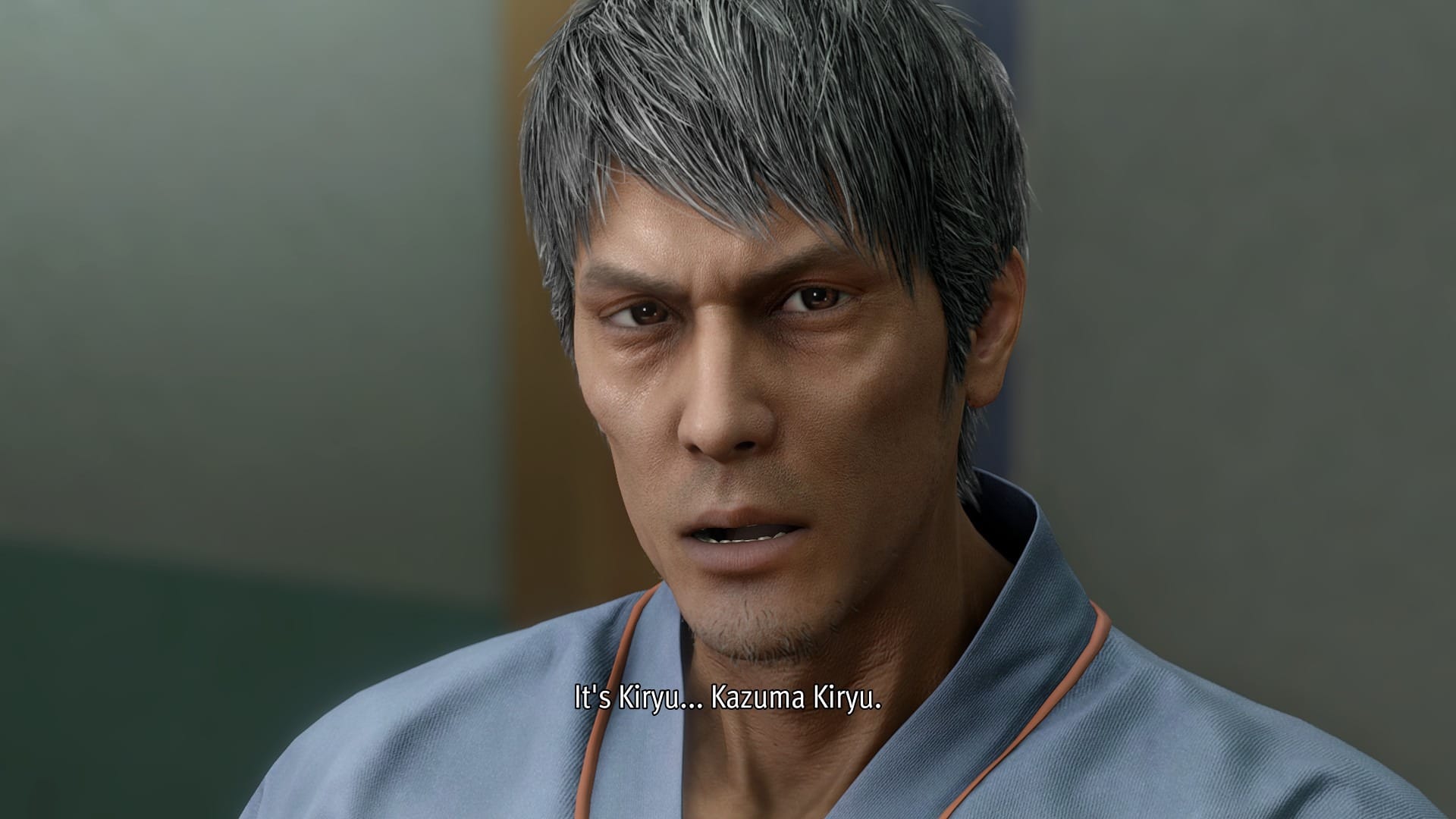
If his story had played out differently up to this point, I might even feel fulfilled by this choice. It’s the polar opposite of his decision in his other final game: choosing to live, to stay, for himself as much as for those he loves. His time with Kasuga and the party infected him with a desire to keep going, keep looking up from rock bottom, keep living. It’s an end to his arc that felt impossible to imagine in 2016 — watching the Dragon with a lifelong death wish look cancer in the face and refuse to give in. I want to love this narrative turn.
But I know RGG. I know why Kiryu stops refusing chemotherapy. I know why he reclaims his name. I know why he’s still alive, ten years after his death. It’s not to grant him a comfortable year or so of end-of-life care, unburdened by the sins of the yakuza, nor to let him pass peacefully when his time finally comes. It’s to create some ridiculous justification for Kiryu being healed of his previously-terminal cancer and brought back to top form in time for inevitably heading Like a Dragon 9 alongside Kasuga, or another solo spinoff, or even pushing Kasuga out of focus to lead alone. I wouldn’t put it past them at this point.
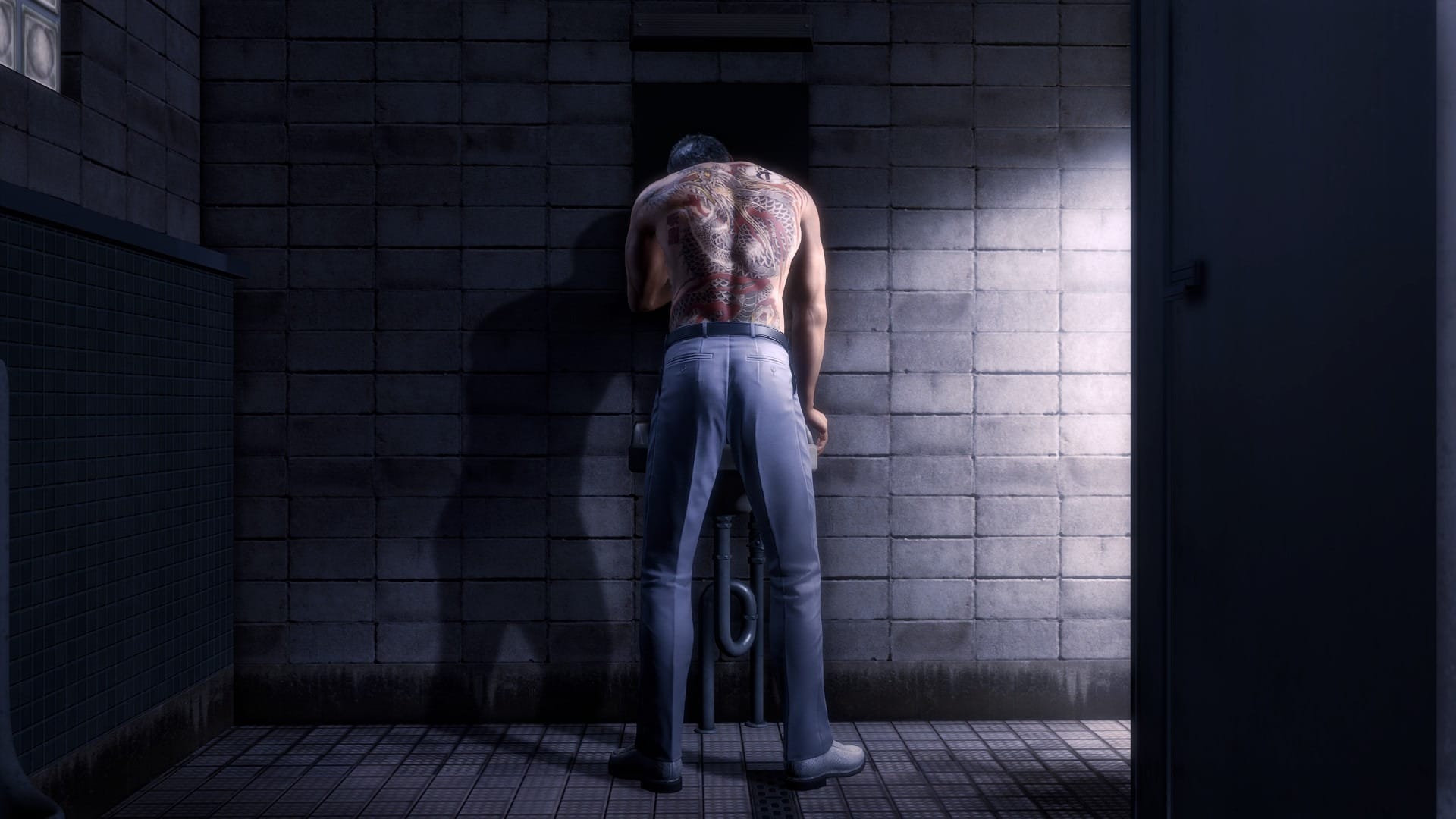
And so we come to 2026, marking a decade of Kiryu persisting between life and death. In addition to featuring the known casting of an admitted sex pest and cleaning up the reputation of a fictional sex pest in a major sidemode, Yakuza Kiwami 3’s existence is a stronger argument for Kiryu’s retirement than I could ever hope to make. Following the successes of Kasuga and Yagami as protagonists, following Kiryu already retaking center stage in Kasuga’s own sequel, he’s ripped from his hospital bed once again for no reason but desperate nostalgia, or a baseless fear that the series would die if Kiryu finally does. Hell, even in Pirate Yakuza in Hawaii (2025), another spinoff not featuring Kiryu, it’s revealed at the last moment that Majima’s wacky pirate adventure was all motivated by a search for a magical rock that can cure his cancer. Who fucking cares anymore?
Trotted out to retread the events of Yakuza 3 (ironically, a game that was intended to be one of his many final chapters), Kiryu’s forced into entirely new side stories in which the studio proves it has truly lost sight of what makes Kiryu “Kiryu.” From baffling moments of naked chauvinism on the streets of Kamurocho to happily taking over as leader of a gal gang and becoming nothing more than a male power fantasy within a women’s space, it’s evident that Kiryu in Kiwami 3’s new content is some kind of strange self-insert for its writers — misogyny not just included, but prioritized. I didn’t expect Kiwami 3 to be good, but I didn’t expect it to assassinate his character long after his supposed death and make famed woman-respecter Kazuma Kiryu a blatant misogynist. The Dragon is still onscreen, but his spirit is gone. His time has long since passed, and this is the final nail in the as-yet-empty coffin for me.
By now, I’m just falling out of love with this series. Each new game, studio decision, and controversy just makes me more furious with its current state, and nostalgic for a time just a few years ago. I miss the wonder of playing Yakuza 0 (2015) for the first time, having bought it on sale in early 2020 without much thought, not knowing the effect it would have on me. I miss the feeling of experiencing Yakuza: Like a Dragon during what was my life’s lowest point, and being genuinely inspired by Kasuga’s resolve to climb back up from rock bottom and keep living. It’s not an exaggeration to say that it saved my life. Yet, I feel that my love is fading as the Dragon slowly does too. Maybe I should just let it die.