The first thing I remember doing in a video game is dying. Which death came first, I’m not sure. But I remember what the deaths looked like: shrinking, falling, exploding into nothingness. The earliest games that I played, arcade ports of Pac-Man and Dig Dug on a plug-and-play console, quickly made me associate failure with macabre, playful melodies. Pac-Man shrinking and popping has a musicality to it, Dig Dug (like another of my introductions to the medium: Super Mario Bros.) has a game over theme that signifies the move from one life to the next. Similarly, the first time I died in Death Stranding, I heard a snippet of a nursery rhyme sung to me.
London bridge is falling down. Falling down. Falling down.
Death in video games is a fickle thing. Dying in a video game is frustrating, but it’s also memorable. In the liminal moment between death and rebirth the player assesses how their end came to be, and a question must be asked: What did I do wrong that caused me to die? Most importantly, death in video games is synonymous with failure. It is a mistake. A respectable video game character is not supposed to die. It cannot be the way the story ends. There's no catharsis in it, no resolution that comes with the ending of a life.
Death is much more daunting in the real world. It is unpredictable, and more importantly, irreversible. The dead do not simply fade from existence once their programming has ceased to operate, nor does the world revert to undo the passing of anyone deemed unfit to die. The dead take up space and require tending to. We seldom allow them to simply lie where they lay. The dead haunt us, both in their taking up of physical space and in their absence from our worlds.
Death systems have existed for as long as there has been a culture to determine the ethics of mourning those we have lost. With these rituals we negotiate the place the dead are meant to occupy in our society. These systems and rituals are performed in search of what mortician and author Caitlin Doughty calls a “good death.” Doughty’s book From Here to Eternity follows her travels and study of death rituals around the world to find the ways mourners can meaningfully act on their grief. She contrasts these rituals with contemporary death rituals that ask us to outsource our dead to hospitals and funeral homes, places of industry that prescribe processes that reduce the individual mourner to a spectator of the death system. Doughty makes the effect of this outsourcing clear: “If we can be called best at anything, it would be at keeping our grieving families separated from their dead.” This separation disconnects people from their dead and from the rituals that allow for catharsis in mourning. It also leaves us unprepared for when death comes knocking. Doughty writes:
One of the chief questions in my work has always been why my own culture is so squeamish around death. Why do we refuse to have these conversations, asking our family and friends what they want done with their body when they die? Our avoidance is self-defeating. By dodging the talk about our inevitable end, we put both our pocket-books and our ability to mourn at risk.
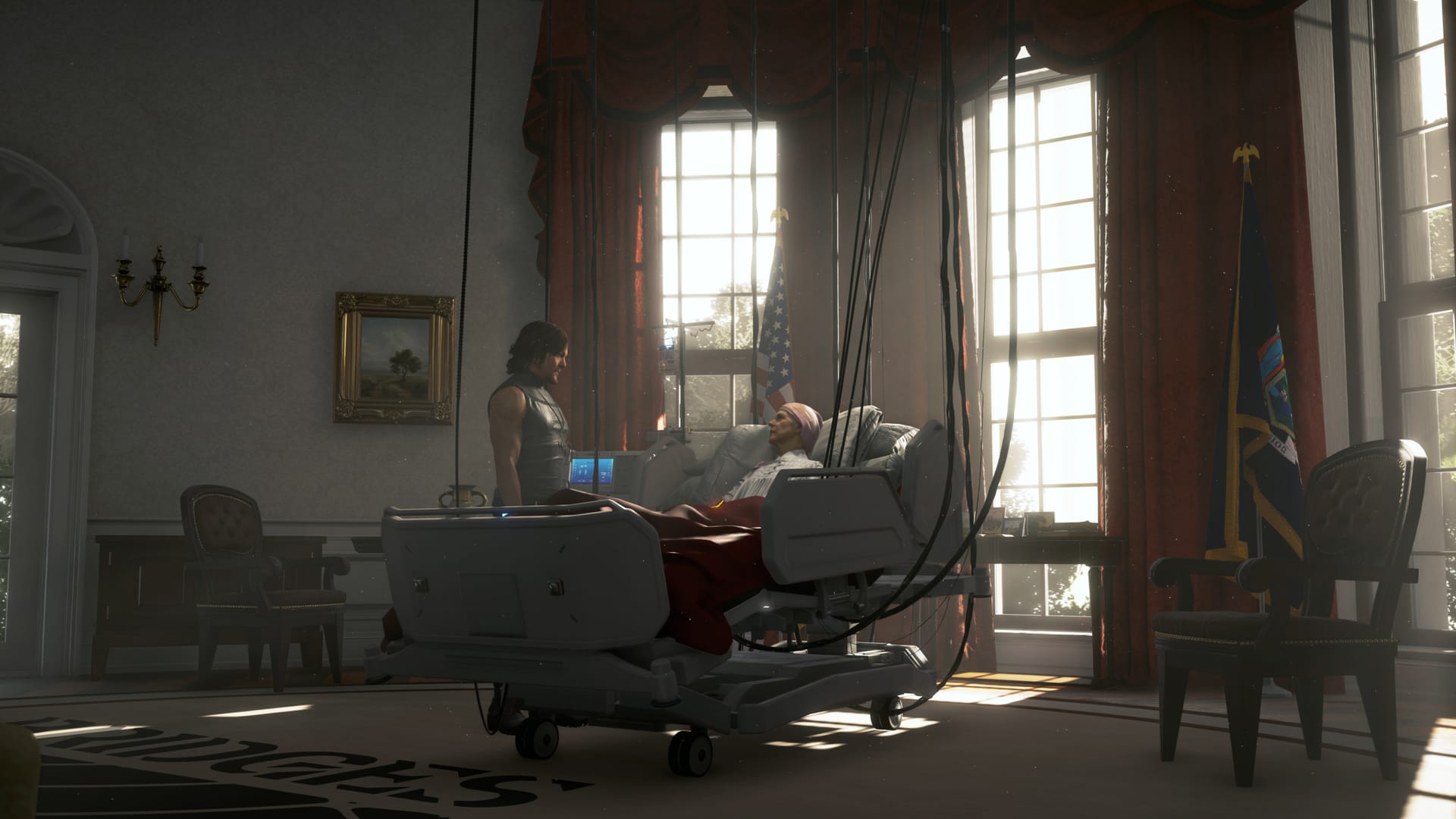
In the years following the COVID-19 pandemic, the Death Stranding games carry the weight of a time period that, at least in the United States, many were unable to reckon with death. Hideo Kojima himself has acknowledged that the pandemic reshaped his approach to making Death Stranding 2: On the Beach. The idea that so many could be dying was too much for some to bear, leading to schisms in belief among the populus. A mass grieving occurring while quarantine protocols were in place meant that connections between the living and dead were tested. More than ever we were forced to resign the handling of our dead to both the funerary industry and the medical system attempting to lessen the spread of COVID-19. At the height of the outbreak, stories of bodies piled in refrigerated trucks and mass graves were reminders of our need as a culture to tend to our dead. In a culture of people unable to properly mourn, a good death is out of reach.
In the United States we rarely think of having to handle and move our dead. We wince at the pale stillness of the body at visitation. The thought of touching a dead body disgusts American sensibilities of cleanliness and composure. The touch of the dead is a dangerous thing. But various death rituals involve hands-on interaction with our deceased loved ones. To Doughty, the rituals that offer the most emotional fulfillment are born from the desire of the living to care for those who have gone. In her travels she finds mummies in Indonesia kept in open air for years, spoken to and moved about as if they see and hear still. In Crestone, Colorado, open-air funeral pyres allow mourners to spend time with their dead and each other, the flames cremating the corpse and warming the community. In Tokyo, a columbarium uses a state-of-the-art lighting setup so that when a family visits, the Buddha statue representing their lost one glows white amidst a sea of identical light-up Buddhas. In Bolivia, skulls and mummified heads are preserved as ñatitas, dressed and displayed to receive offerings in exchange for blessings. A consistent value Doughty puts on these rituals is that handling the dead allows the mourner a sense of direct connection, continuing a dialogue with those who have left us that we risk losing when we outsource the process of caring for our dead.
Death rituals vary, but in game worlds they are few and far between. In truth, there is seemingly no reason to meaningfully mourn a death of a player character. Often death is rendered meaningless through the narrative retcon of continuing after a game over screen. But like any story form, video games can contextualize death in narratively salient ways.
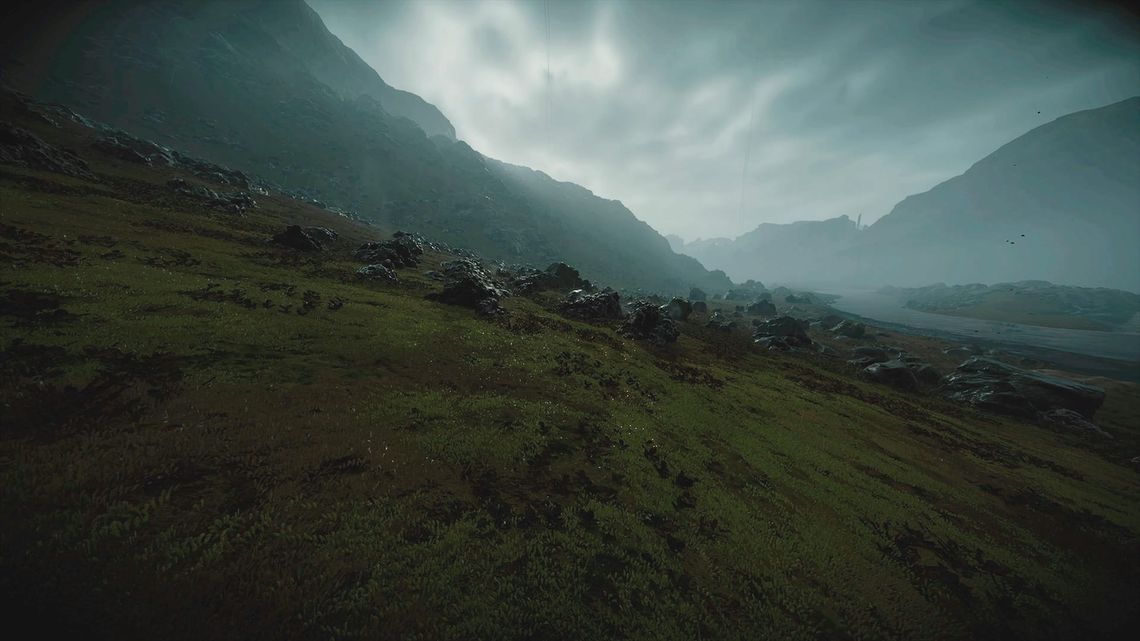
Through the Death Stranding games in particular, we see how a society creates a new death culture after catastrophe, and how this new culture affects the games’ world and the people within it. Dying in the world of Death Stranding is a dangerous prospect. The space between the worlds of the living and the dead, known as the Beach, has changed after the Death Stranding, and the United Cities of America struggles to rebuild itself. One character says the worlds have gotten “mixed up,” another describes it as a tangling of the liminal spaces. The soul is meant to cross the Beach to the world of the dead, but the Death Stranding leaves souls in the world of the living. They manifest as Beached Things (BTs), ghostlike entities made of antimatter. If a BT touches a human, a large explosion known as a voidout is triggered, leaving a massive crater in its wake. The touch of the dead is a dangerous thing. When a corpse must be dealt with, body bags are given to couriers that anonymize the person inside. All corpses are dangerous to the preservation of community, and the necessity of every corpse’s annihilation subsumes any individual’s desire for memorialization.
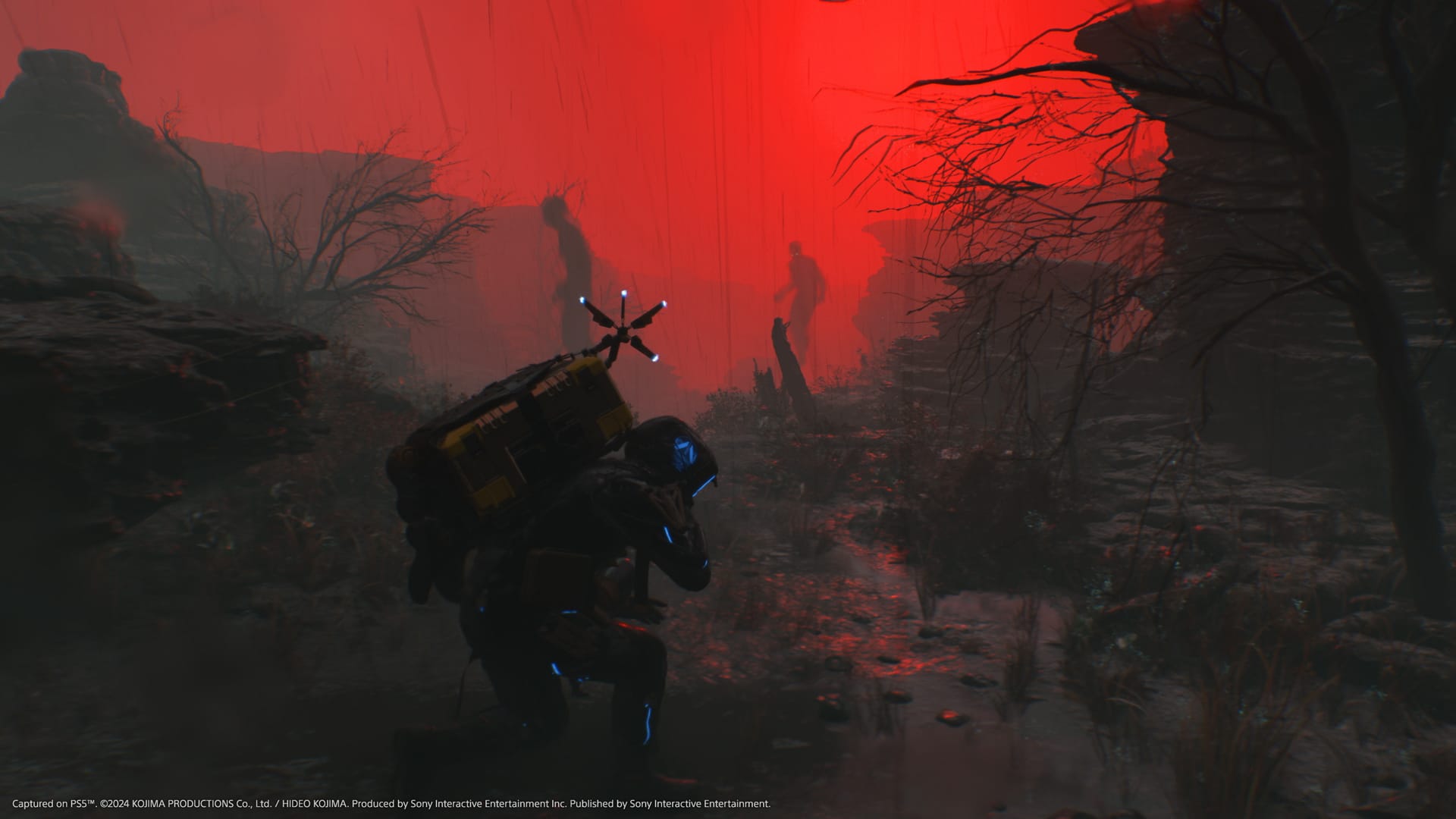
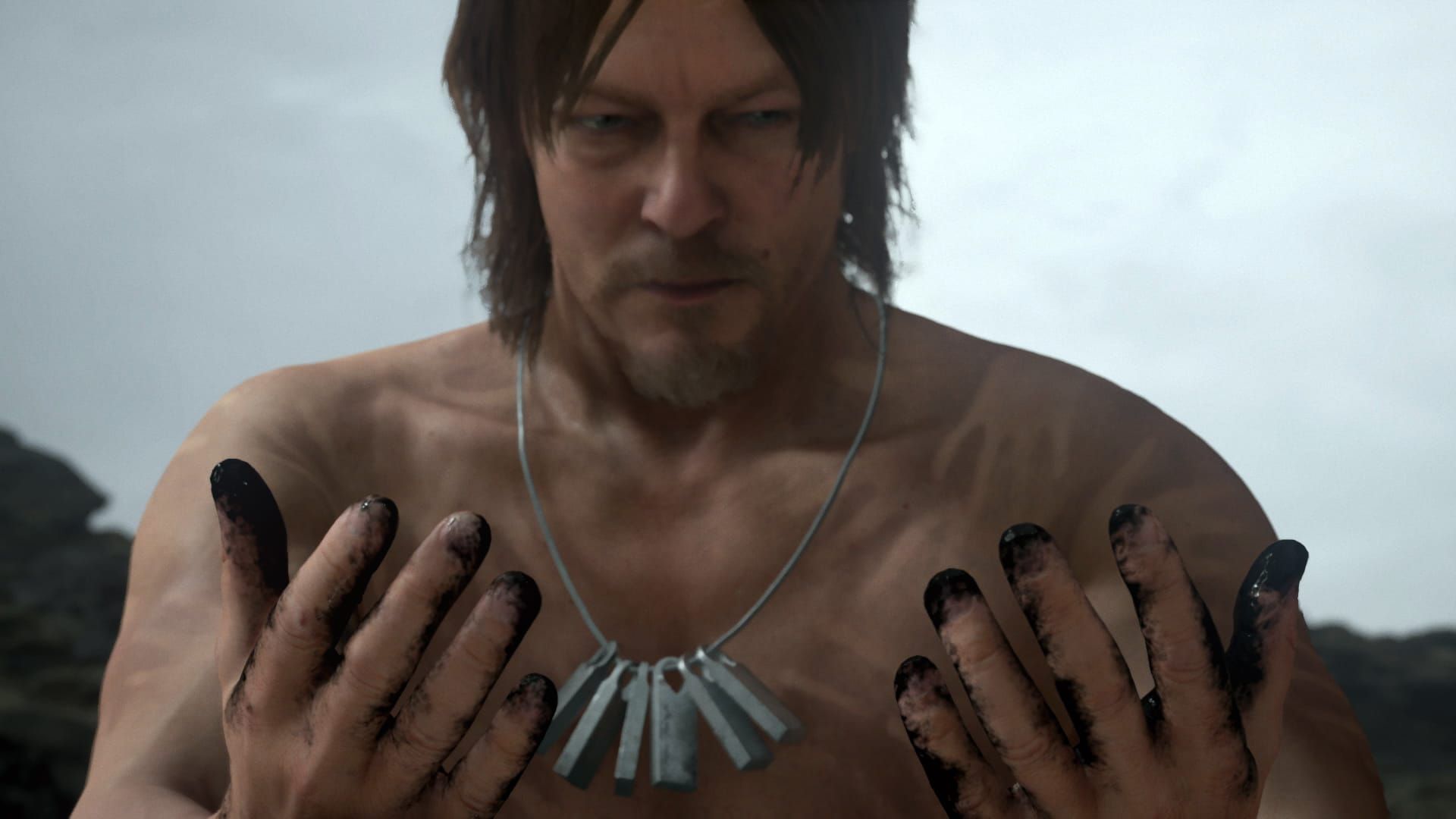
In Death Stranding and its sequel Death Stranding 2: On the Beach the player controls Sam Bridges, a porter who delivers packages in America, Mexico, and Australia after the titular apocalyptic event. As part of his first major mission, we get a firsthand look at the death culture of Death Stranding’s world. A man has died by suicide in Central Knot City, one of the many new city settlements developed since the Death Stranding. A corpse disposal team needs Sam’s help delivering the body to a distant incinerator before it enters necrosis and the soul becomes a BT. While riding in the back of a truck with the corpse, Sam and corpse disposal team member Igor talk about the way things used to be. Igor longs for connection with the world that was lost with the Death Stranding, and fears being washed away by timefall — rain that ages everything it touches. But the corpse begins to necrotize and BTs pursue the truck and crash it. Sam is attacked by a BT and dies, only to wake up in another city days later. Before he wakes, he sees his sister Amelie on the Beach, singing London bridge is falling down as she walks into the sea.
Where Doughty’s “good death” concept emphasizes the mourner’s intimacy and connection with the dead, Death Stranding makes physical intimacy with the dead dangerous to the point that it’s impossible, despite the lingering presence of the BTs. Due to the danger posed by BTs, all corpses are required to be incinerated with haste. This uniformly adopted mortuary practice (similar to Japan’s near-universal crematory ritual) means that the world of the games lacks physical space for the dead. Nevertheless the dead are present and dangerous to the touch. Intimacy between living humans and the BTs is impossible. In this world, a good death is out of reach. How then do the characters of Death Stranding attempt to mourn their dead?
Both games depict characters who attempt to mourn in ways that further their suffering. Heartman laments that he did not die alongside his family in a series of voidouts, and becomes obsessed with finding them again. He searches for his dead wife and daughter by constantly putting himself into cardiac arrest to survey the Beach in the minutes between life and death before being resuscitated. He makes little progress through years of attempts, his constant trips to the Beach eating away at his body to the point he needs his heart replaced by Death Stranding 2. After discovering it is impossible to find his late wife and child because each individual possesses a separate Beach, he finds new meaning in his inability to reconcile with them and puts his search behind him, embracing the fulfillment of his connections with the living around him.
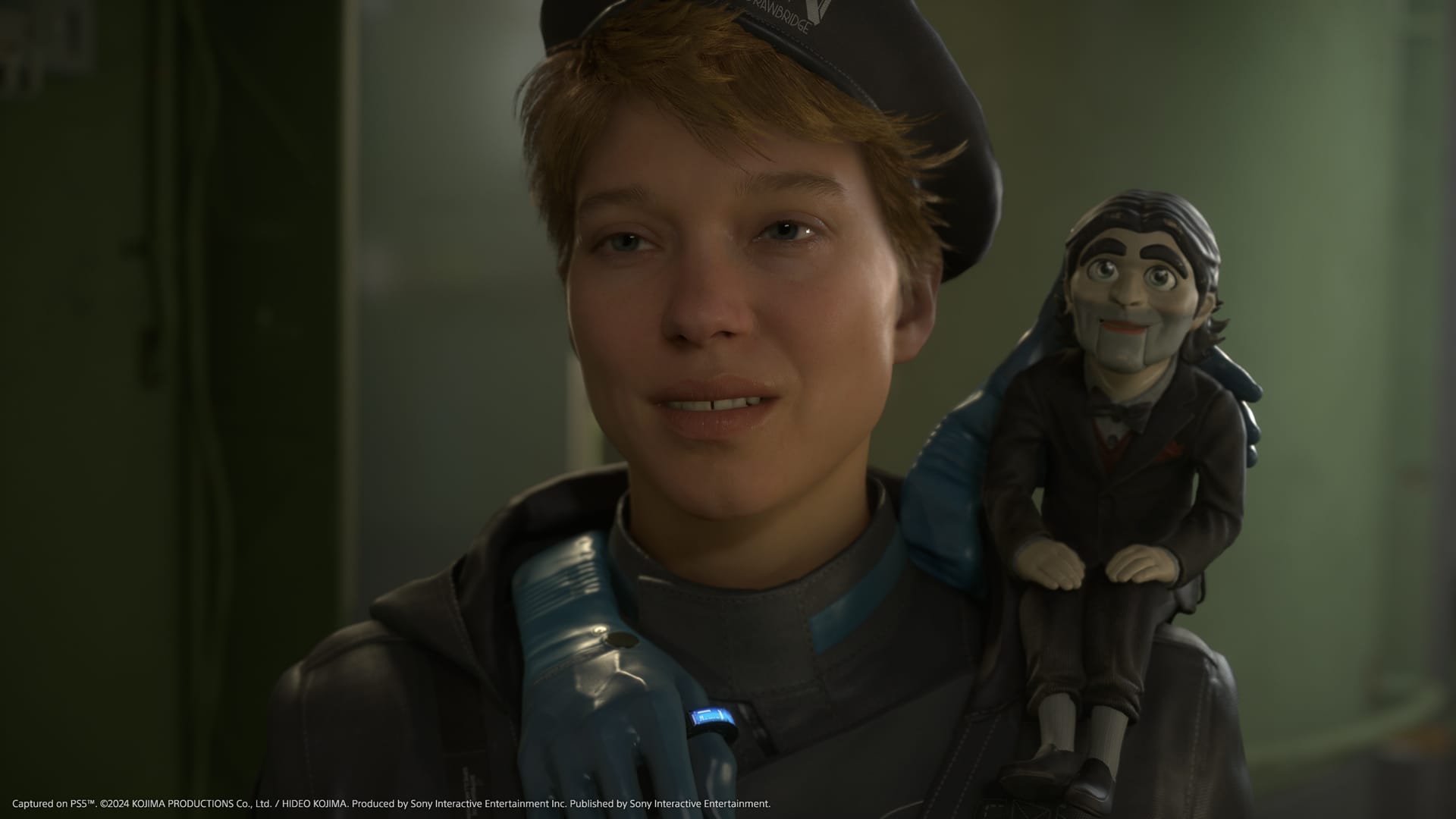
Another stifled mourning comes in the story of Dollman. After the death of his wife, his daughter insists on visiting the site where her BT and several others reside. This desire to physically reconnect with someone who has passed on has dire consequences: a voidout is triggered and Dollman’s daughter becomes trapped inside of her doll, only for his soul to “push” her out and take her place, becoming trapped himself. In his attempt to memorialize his wife, he suffers the loss of his daughter and his human body.
Not all hope is lost for fulfillment through mourning, though. Tarman serves as a positive example. After losing his son in a BT attack, Tarman memorializes him by displaying a photograph of them working together, and by taking in an anomalous winged tar-cat that appeared to him right after his son’s death as a pet.
Like the aforementioned characters who have a reckoning with the nature of death, or are haunted by someone lost to them, Sam too carries unaddressed grief. Sam lost his wife and unborn child in the Death Stranding, his memories fragmented by his death in the voidout that took his family from him. Without a complete memory of what happened to them, he is unable to mourn their deaths — his wife and child simply disappear. This severs his connection with them, and it’s only by the end of the second game that we see Sam return to a full awareness of and reckoning with his past and present connections.
As illustrated by his expiration in Death Stranding’s corpse disposal mission, Sam has a special ability: repatriation. Should he die, his soul can re-enter his body, returning him to life. Sam’s nigh immortality makes him an indispensable resource to the government of the United Cities of America and his adoptive mother President Bridget Strand, who dies in Death Stranding’s first act after urging Sam to help her rebuild America. She crawls toward Sam, attempting to embrace him as her body expires, but he keeps her at a distance. Here we learn Sam has haphephobia, a fear of touch, and is resistant to physical intimacy. He recoils from the touch of multiple characters throughout both games, and the player is incentivized to not be touched by BTs or enemy terrorists known as the MULEs. During combat encounters, BTs pursue Sam, half-formed bodies writhing through a tarlike muck, elongated fingers reaching for him. For Sam, to be touched is to be dead.
As the player character, death is a threat that extends to Sam during gameplay. Generally, death in video games is a fail state. Dying is a mistake that cannot be tolerated by the reality of the game, hence the need for extra lives or the dreaded GAME OVER — the closest any video game hero comes to a real death, but of course even that is only temporary. Games often don’t want us to be content with death as an ending. It is merely an obstacle along the path to success. The act of dying therefore usually fails to produce cathartic exegesis in the player experience. Death comes with a reset, a retracing of steps, an implicit acknowledgment that while it may have occurred, it is not canonically present after the rebirth. The player takes the knowledge of the previous life with them, but the game world is unmoved by this cycle. Death is not meant to be mourned, as it is not meant to occur in the first place. Death Stranding subverts this process. Instead of having the player abruptly time travel to a previous checkpoint, the player’s failure, death, and rebirth is made diegetic. Sam’s death at the hands of a BT causes a voidout, and the player will see a dome-shaped crater where they last stood. This crater remains throughout the playthrough, visible on the world map. Death leaves a mark.
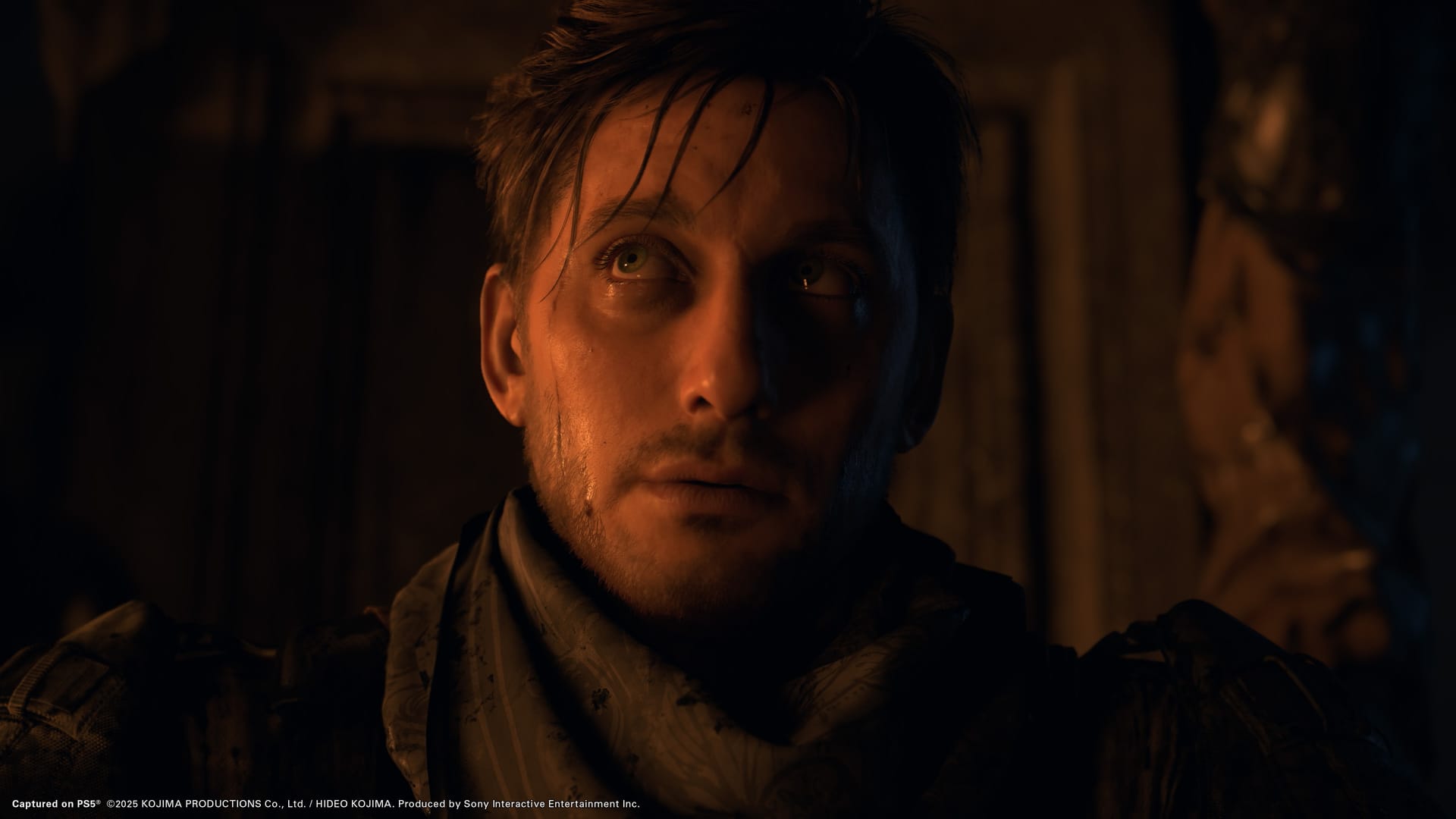
The player as Sam also engages in mourning rituals through boss battles. In Death Stranding and On the Beach respectively, Cliff Unger and Neil Vana serve as ghosts with unfinished business that trap Sam in illusory dimensions representing their unresolved tensions. Sam is ultimately able to settle these spirits by learning their stories and the role they each played in his own life. In both cases, the resolution of this tension is represented through Sam touching the ghosts as he brings their spirits to rest. Through these hauntings he is able to see the shape of the connections he shares with the living and the dead. When Sam engages in physical intimacy with the ghosts, he gives Cliff and Neil’s deaths newfound meaning. Their deaths are made good by his ability to remember and do right by them. In From Here to Eternity, Doughty describes a “death space” where mourners are comforted, held in a “ring of safety” that lets grief be its most honest. Throughout the Death Stranding games we observe characters creating these death spaces through dialogue, but Sam takes this further, overcoming his haphephobia by embracing the ghosts that had no death space held for them. In Sam’s most vulnerable moments, he asserts his most important connections through touch.
In many ways Death Stranding is about connection beyond the physical. It is a story filled with death and with haunts. Only during emotional breakthroughs does Sam touch characters like Cliff, Neil, and others. For Sam, touch is the confirmation of the connection already forged. But touch is also necessary to complete a good death; Doughty emphasizes the importance of being present with the dead. Death Stranding is a game about being present, even with the intangible — to feel connections beyond the physical. We see this in several narrative beats, as well as the multiplayer interface of the game that encourages players to leave messages and tools behind for other players to find on their own journeys. Over and over again, though, touch is what completes connection. The touch of the dead is a dangerous thing, but it is vitally important that we must hold on before we can let go.