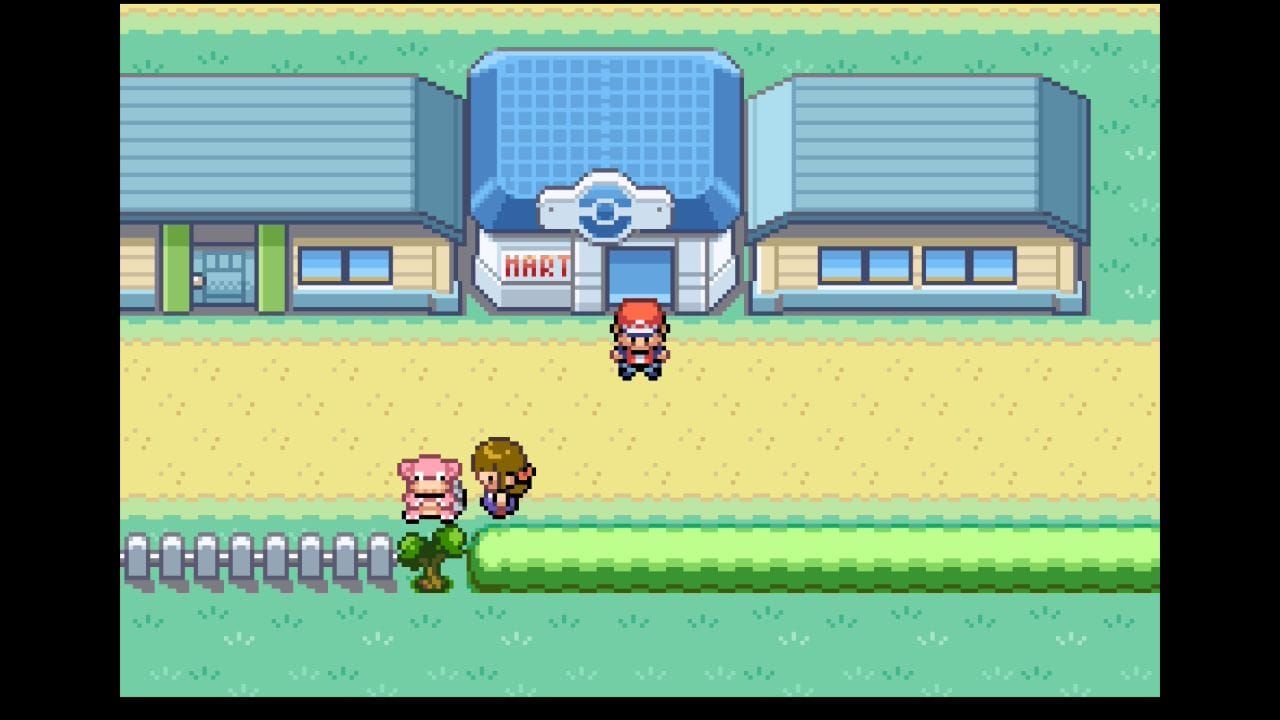
When it felt like everyone else was playing the Switch ports of Pokémon FireRed and LeafGreen in March, I finally hacked the New Nintendo 3DS XL I bought with money from a traded-in Xbox One back in 2016. (It was surprisingly easy!) Besides playing all the 3DS releases I didn't have the money for in high school and college, I knew that I could run GameBoy Advance games natively on it. I set everything up to play LeafGreen for the first time, chose Bulbasaur, and then caught a Pidgey who I knew I wanted to fly across Kanto because I have thought Pidgeot was neat ever since watching reruns of the original dubbed Pokémon anime in elementary school.
I didn’t know if I’d fly, though. My impression of the game, congealed from years spent hearing other people talk about Pokémon and retro games in online gaming and emulation forums, agreed that old games like the first few Pokémon generations were tiresome things made for kids, not adults who have responsibilities. Too many random encounters. Slow progression. I wasn’t sure I’d even get past Pewter City. First, I had to hike through Viridian Forest. While tackling all the bug type Pokémon that appeared in the wild grass, I encountered a Pikachu. How could I not see this as anything but serendipitous? I haven’t played a Generation 1 Pokémon game since finding my older brother’s Yellow with a dead cartridge battery that I played on a discarded Game Boy Pocket, unable to save my game and progress beyond its first few hours. Now, here it was, the Pokémon. Don’t tell me about the hardcoded probability of any player encountering the mascot early on — I had to take him with me. Didn’t you?
But this is when my fears about playing an old Pokémon game were confirmed. It was slow. Grindy. My trio was underleveled and I tired of just pressing tackle repeatedly or switching out my too-weak Pidgey at the start of every battle to skim some of the experience points off the Bulbasaur. Adding Pikachu to my team meant I was committing to doing this for even longer than I already had to. Minutes? Hours? Days, really. As someone who’s real first Pokémon adventure was Diamond (how many Florida summers I spent in Sinnoh's wintry reaches), I knew I couldn’t escape what I’d been told about old Pokémon releases: They just don't hold up. So, I edited my save.
But I am a serious critic of video games! I've put up with worse. Beaten games before the guides were written. Spell “video game” as one word when allowed to. [Ed. Note: The style guide comes for us all.] So I, thoughtfully, devised a rationale. I would move at the pace of the game, just not for as long as it wanted me to. I wouldn’t play at 2X speed (something the New 3DS hardware isn't capable of anyways), but I would make sure I wasn’t wasting time repeatedly running back to a Pokémon Center when I couldn't afford enough potions to push through trainer battles and wild encounters on my way to the next town. I would battle all the trainers on routes between cities and catch all the new Pokémon I saw, but I would still teach my Pokémon (or one unfortunate Nidorina) the HMs I needed to progress past environmental barriers, which both Pokémon games and many ROMs do away with in the name of “quality of life” improvements. All I had to do now was open a save editor on my 3DS' homebrew launcher; use a Reddit comment to guide me through its unintuitive, split-screen UI; and click the plus button next to whatever I wanted. I filled my bag with Poké Balls, Potions, Repels, Escape Ropes, and, of course, 99 Rare Candies.
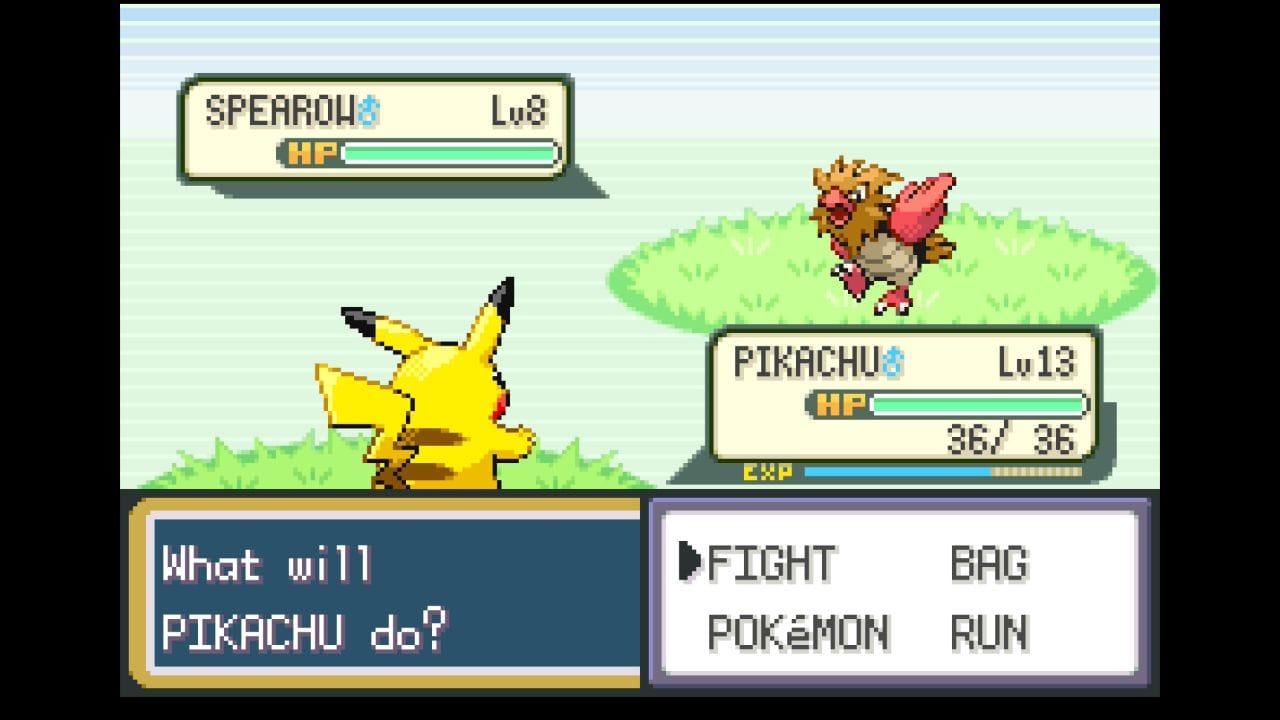
I don’t feel like I missed much by not switch training Magikarp into Gyarados. Instead, I got to focus on type advantages and status effects earlier on, which I learned punch well above their weight in LeafGreen. And hours later, sometime past Cerulean City, I realized I was playing the game entirely on its own terms. My Pokémon were leveling up faster, I had a growing arsenal of moves to deploy, and I wasn’t bothering with Rare Candies anymore. After I used up the Potions and Poké Balls and Escape Ropes I had initially added to the game, I didn’t edit my save to get any more — I just bought them at a Poké Mart. The credits I raked in from all the trainers I beat in battles along the way paid for everything new I needed, and I found I reached a sustainable income for the amount of items I was expending to move forward. Really, I just gave myself a quick start to get into the groove of things. And now I was carried by momentum, a positive feedback loop of battling and catching and exploring. The wind was at my back as I zipped across the fields of flowers on Route 8. Did you feel it too?
In the preamble to the game, a nameless authorial voice told me I would “embark on a grand adventure” in which I am the “hero.” As it foretold, new paths had opened to me as I helped people in need. I overcame challenges and solved mysteries. I was brave and I did push on. It concluded: “Through your adventure, we hope that you will interact with all sorts of people and achieve personal growth. That is our biggest objective. Press the A button, and let your adventure begin!” When I caught a Vulpix outside of Celadon City to deal with the grass-type gym, I trained her myself using Will-O-Wisp and Confuse Ray to chip away at enemies — an entirely different way of playing Pokémon than I had ever done before! I finally understood why people love these old games. And when I crawled out of Silph Co. after besting Giovanni, I felt the accomplishment of doing so entirely on my own. Venusaur, Pidgeotto, Raichu, Gyarados, Ninetales, Vaporeon, and I liberated Saffron City on our own. I didn’t even look up a guide to navigate the teleporters.
But I still couldn’t fly.
Despite how important I imagined flying across Kanto was at the outset of my journey, my Pidgey was now a Pidgeotto who still hadn’t learned the game’s most rousing HM. I hadn’t even found it yet. I had only located a couple HMs, actually. I had started to feel that something was off when I beat Saffron City’s Gym and got the sixth gym badge instead of the fifth, so I looked up a guide. Consulting an online walkthrough, I pieced together that I must not have gone far enough west in Celadon City to discover the route over water on my map is actually a bridge, and that there is a tree on the way that can be Cut to open up an alternate route that leads to the secret hideaway of a girl who gifts players Fly. Instead, I had gone east out of Celadon to Saffron City, then around the southeast corner of Kanto from Lavender Town to Fuchsia City. But I needed to fly on that Pidgey I caught at least once! I biked up the cycling road, slowly pedaling up the incline rather than breezing down the path to Fuchsia City in order to fulfill this narrative demand. I imagine my trainer panting, thighs aching, but satisfied. I now knew struggle. I had taken the long way without even knowing it.
Where should I fly first? Home, of course. To Pallet Town, to Mom. I talk to her, she tells me to rest. I go upstairs. Nothing here has changed. Have I?
You and I, we both pressed the A button to start our adventures. We beat the same gyms, even if we took different paths. I could tell myself I hadn’t played the game wrong. But I had access to things you didn’t from the start, even if I denied them when it was comfortable to. I knew I had to reconcile where all those extra items came from. I knew I had to make material that invisible bag that only I had access to in all of Kanto. It is tempting to read my playthrough merely as consumption — my trainer paying to win, the player alleviating the actual training in order to accelerate completion for its own sake. Pokémon itself is a cogent example of hyperconsumption today, of buying turned lifestyle. With licensed clothing, merch, and Lego; the transmutation of collecting into speculation; and collaborations with cultural institutions, there have never been more ways to conspicuously flaunt one's status as a good consumer of Pokémon: the very best, like no one ever was. Even in LeafGreen, there already exists a class of trainers called Pokémaniacs who cosplay as Pokémon. I beat them easily and took their credits.
Rather, I didn’t need to edit my save further because I had amassed such wealth that any more income did not meaningfully increase my happiness or quality of life as a trainer. Perhaps I only started playing the game on its own terms not because the game found its groove, but because I had all my needs met by dollars. I could tell you a version of the story without revealing my advantage, emphasizing the points of discomfort that stood out as anomalies. But what meaning could I make out of it? As children mature by finding the bounds of their omnipotence, games impose arbitrary restrictions on play that we navigate, oriented by objectives, into new agential forms. In LeafGreen, the grind and pace of training, the close calls and defeats, are all friction that, like a whetstone, hone the player into someone more focused and pragmatic. In the developer’s own words, toward personal growth. I was playing to win, but what does it mean for my character to have reached into that conjured bag and foregone these experiences without having been consciously aware of them? How can we read LeafGreen's bildungsroman differently after hacking the game?
“I have come to see white privilege as an invisible package of unearned assets that I can count on cashing in each day, but about which I was ‘meant’ to remain oblivious,” feminist scholar Peggy McIntosh writes in her 1989 essay “White Privilege: Unpacking the Invisible Knapsack.” “White privilege is like an invisible weightless knapsack of special provisions, maps, passports, codebooks, visas, clothes, tools, and blank checks.” Despite my thoughtful rationale, an invisible backpack provided tools of comfort — for my trainer, who wasn't learning, and me, who wasn't playing the game on its own terms. The journey became comfortable. The challenges I overcame were flattened. Rather than forge the very best, I reared an insecure trainer.
I could tell you I beat Silph Co. on my own without mentioning the guides I looked up on evolving Pikachu and Eevee. I could tell you how I earned these gym badges without saying how many Rare Candies I used. And I could tell you I played Diamond without recounting all the ways I broke the game with an Action Replay. Did I lie, or have we been playing different games from the start?