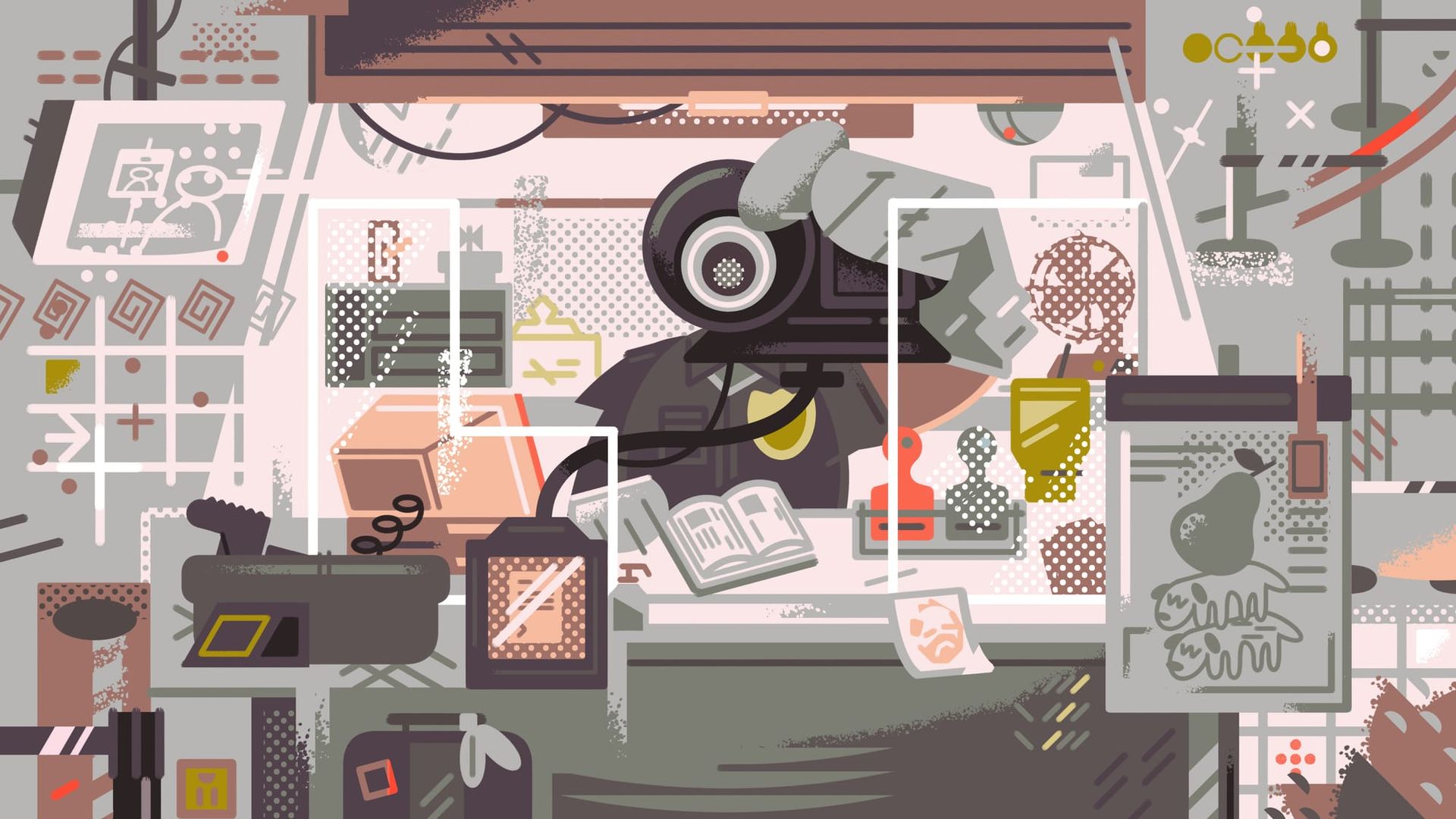
“I promise, that’s me,” I said, my faux-femme voice tightening with impatience. I had flown in and out of Dublin nearly a dozen times while getting my master’s, but this border agent was the first to outright say that my passport didn’t match my presentation. She wasn’t wrong — at 18, I had a full beard, close-cropped hair, glassy eyes, and my great-grandfather’s name. That boy was buried beneath a rounded face and shoulder-length curls; even biometric scanners, like my phone’s Face ID or TSA’s Global Entry kiosks, had trouble reconciling my past with my present.
She stared at my passport intensely, as if she was trying to set it on fire with her mind. Her eyes scrolled up to me, then back to the passport, back and forth until she grew tired. She lifted the document in line with my face, less ocular distance to travel. My Irish Residence Permit card sat untouched in front of her.
“I don’t know what to tell you, dude.” I leaned my elbows on the edge of her desk. Thin, clear glass separated us. What did she want me to say? That’s what I looked like before I started stabbing myself with 0.15ml of estradiol valerate every week. Before I shaved consistently and lasered the hair on my face and groin to a crisp. Before tits sprouted up and my hips began to turn and my emotions became a storm I weather daily. He doesn’t matter anymore. I’m the person he couldn’t imagine. He’s just someone I shared a body with. Instead, I lowered my voice, slouched my back, hunched my shoulders: “I’m him. That’s me.”
The border agent stayed mute. Another agent entered the booth with her — I couldn’t tell if she had summoned him or he happened to stop by — and they whisper-bickered with one another. My passport flopped in her hand, her gestures pointed and terse. The man said something final, and she placed the passport down, stamped it, and handed it over with my IRP. There was no “Welcome to Ireland” or “Céad míle fáilte,” the overly enthusiastic greeting that had been offered to me in the past. I was allowed in but I wasn’t welcome, not because I was a document forger or a terrorist or a criminal: I was transgender. And to some people, that’s even more dangerous.
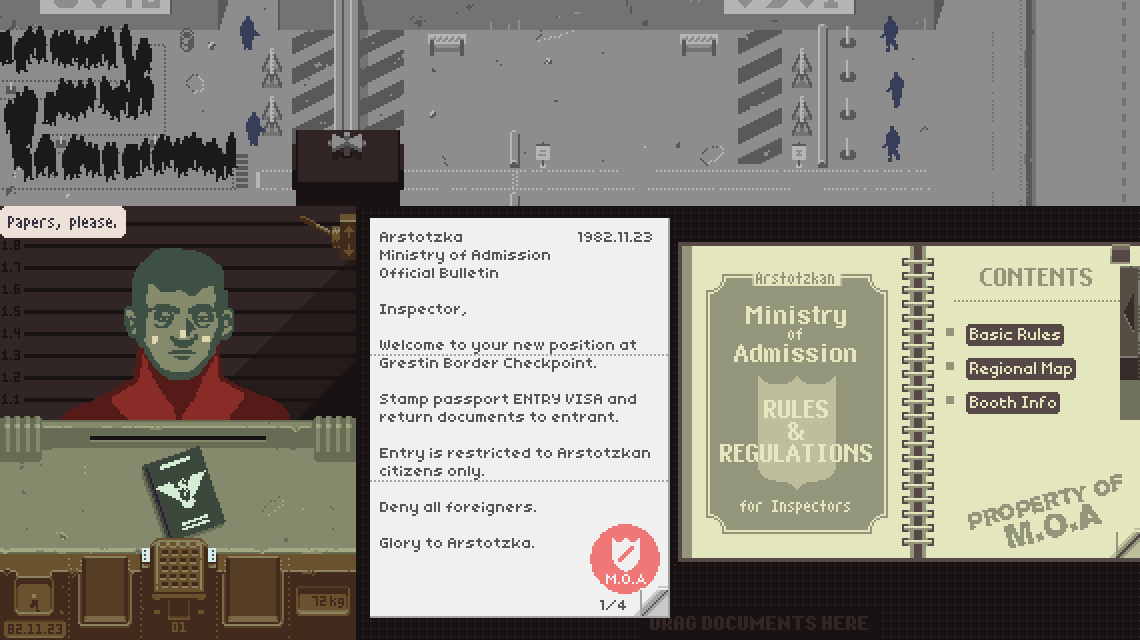
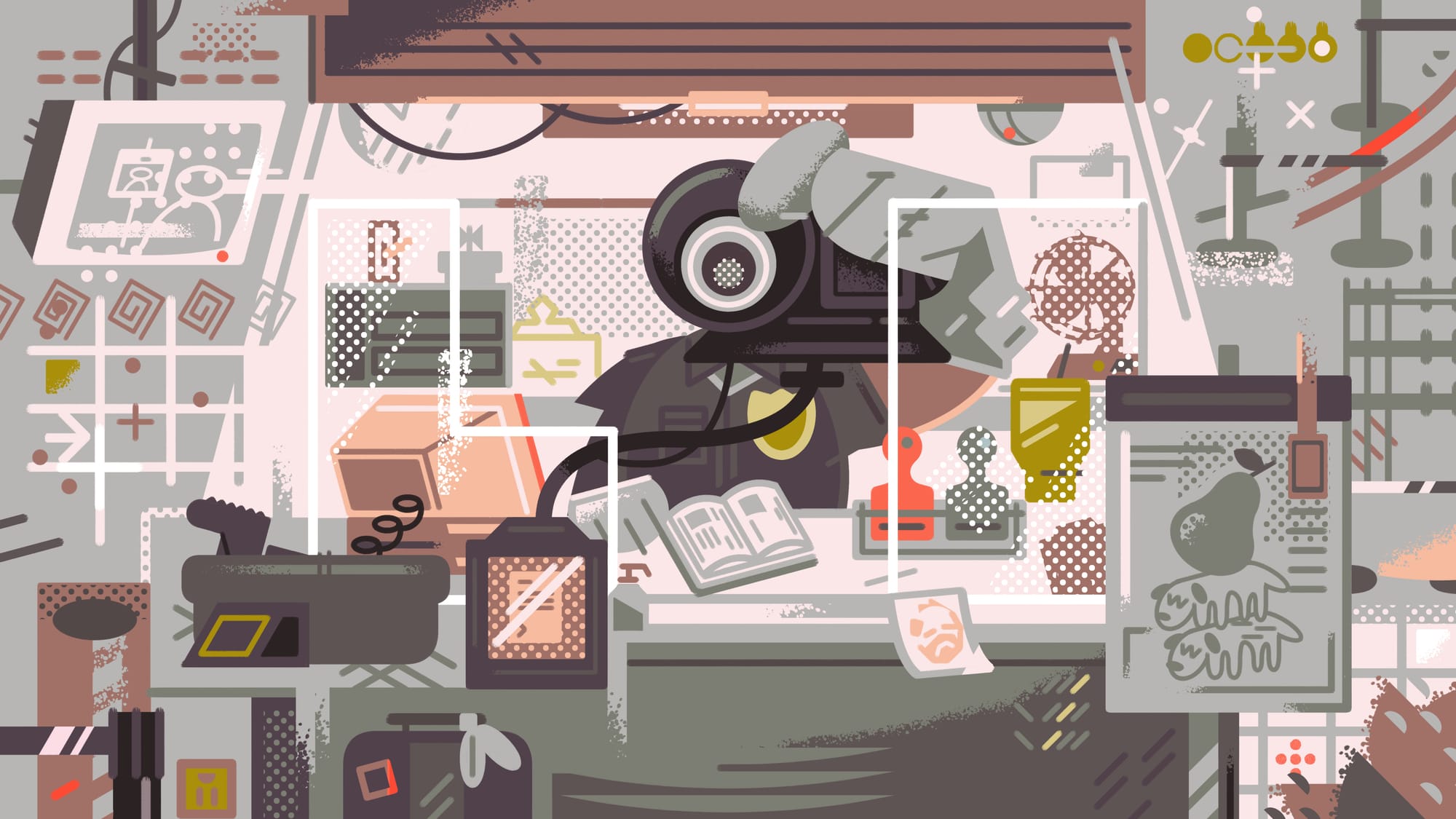
Being a border guard in Arstotzka, the fictional Soviet-esque nation at the center of Papers, Please, is unforgiving and banal. Inspired by creator Lucas Pope’s experiences crossing through various ports of entry during his travels around Asia (as well as visits home to America), Papers, Please tasks players with examining passports, work visas, and travel permits while following the fickle, ever-changing rules of an authoritarian state on the verge of collapse. The line at the border snakes off the screen, and the semi-randomly generated people are impatient and, often, impish. People forge documents to enter Arstotzka: falsified names, misreported genders, impossible birth dates, and touched-up photos abound. It’s the player’s job to determine whether each visitor is who they say they are. Any mistakes — and there will be many, as you are paid for each person you process, incentivizing speed over thoroughness — are caught immediately. After two “free” penalties a day, five dollars per error gets docked from your already low pay. Without money, you can’t feed your family or heat your house or pay for medicine to stave off infection. Without money, your family will die and it will be your fault.
Mornings in Arstotzka do not begin with a coffee or tea or a bacon-egg-and-cheese-on-a-hard-roll, only the delivery of the Truth of Arstotzka, the sole paper of record in the nation. The day after opening the border at Grestin, the one the player singlehandedly manages, the Truth reports that migrants will now be allowed into Arstotzka and they will help the economy and international relations. The following headlines run throughout the rest of that first week: “Terrorists Strike At Grestin! Kolechian Agitators Suspected”; “Blackmarket Activity Explodes. Government Blames Lax Immigration Controls”; and “Jobs Few, Becoming Fewer. Immigrants Taking Jobs From Locals.” The moment foreigners enter, they become scapegoats for problems that most likely existed long before they crossed the border, legally or otherwise.
The Truth is not an honorable paper of record. It is propaganda that exists solely for the benefit of the ruling class of Arstotzka, allowing it to maintain control by unilaterally deciding what gets reported and how, manufacturing consent among the masses to allow for increasingly restrictive, xenophobic border rules. Propaganda provokes a deeply emotional response, justifying force and policy. After a Kolechian kills themself and three border guards in a suicide bombing, the Truth stokes fears of migrants, forcing the government to implement a “random search” of all Kolechian entrants. (This profiling only stops after neighboring countries call the practice out as discriminatory.)
Crossing the border becomes increasingly more absurd and complex for foreigners as the rules change on a whim — one day they need an entry ticket, the next an entry permit, later an identity supplement containing their height, weight, physical attributes, and thumbprint. Even Arstotzkans eventually need to carry identity cards along with their passports. It’s your job as the border guard to juggle the rules of a frightened bureaucracy and treat each potential migrant with the utmost scrutiny: guess their height, look at their photo, scan their body, take their thumbprint. Anything to keep Arstotzka safe. Paranoia means no one can be trusted, not even those within our own borders.
Fear of the other is an open flame beneath the melting pot of society, increasing the temperature one degree at a time until we boil over into authoritarianism. The first bubble in America’s anti-transgender policy popped in 2016 with North Carolina’s Public Facilities Privacy & Security Act, otherwise known as the Bathroom Bill. Applying to government and public buildings, the bill made it illegal for anyone to use a bathroom that did not correspond with their birth certificate. Conversation around the bill, through op-eds and arguments at both Democrat and Republican primary debates, was the first time I remember being aware that my life surrounded by queer and trans teens was unique. A majority of my drama class was some flavor of gay, and a few were nonbinary or actively transitioning.
It seems remarkable now that a sixteen-year-old would be trusted enough to be allowed to start feminizing hormones, brave enough to ask for alternative pronouns and enter a different restroom. We were all people: dumb, hormonal, dorky high schoolers who cried over cast lists and had overly intense dating lives. I didn’t understand why anyone should be kept from using the bathroom that felt most comfortable to them; couldn’t comprehend the fear one person pissing standing or sitting could provoke. When I argued against the bill with my history teacher — a kind, fraternity man who loved Andrew Jackson and baseball — I grounded it in gotchas about the freedom of speech and expression, unaware that logic didn’t matter here. Emotions don’t care about your facts.
People are afraid of trans folks, or at least they’re being primed to hate us. Because we are different, ungodly, medical abominations; because we looked at the hand we were dealt in life and chose to make our own way. Disenfranchised men and women look for monsters when they should be searching for allies. They need someone to project their self-loathing onto. Cowards are afraid of what they don’t understand, and they don’t understand that joy is achievable should you be brave enough to reach for it.
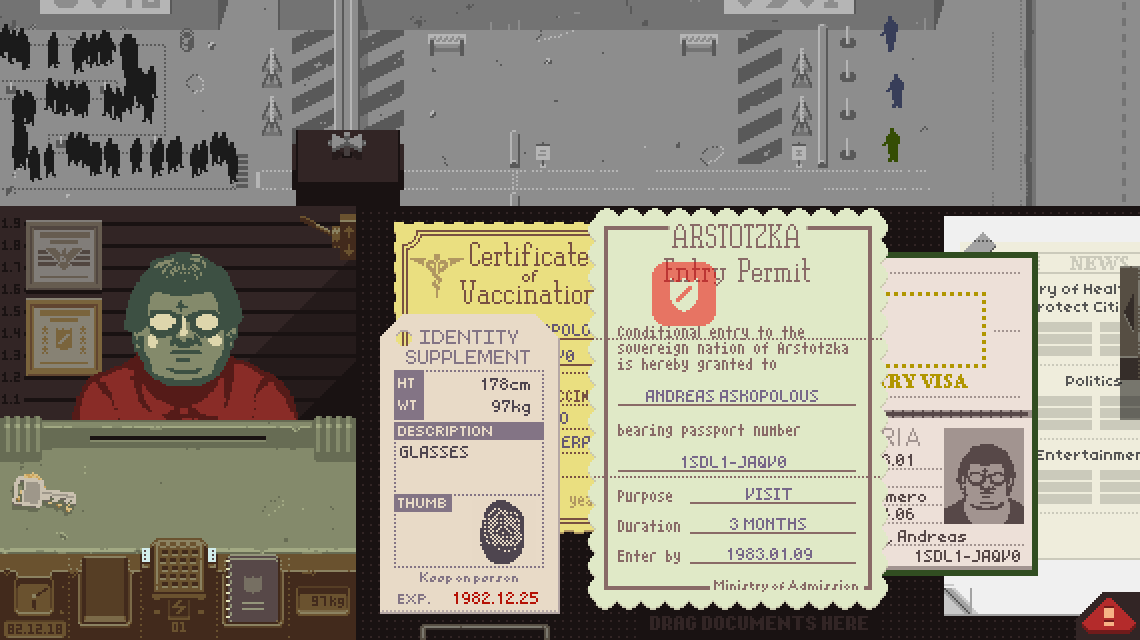
It’s cold in Arstotzka. Winter seems endless. A white shag carpet of snow crunches beneath the feet of immigrants and returning citizens alike, all shivering in the endless line. Soldiers stand at attention in woolen uniforms and cozy hats. When people approach your office — the sole one at the checkpoint — you don’t see their hands shaking, the cold steaming from their lips, their bright red fingers and ears. Pope’s art is too simple for that. Instead, people forget things. They misremember dates, hand over the wrong document, or simply bring nothing at all. One citizen, an older man dressed in a red coat named Jorji, returns to the checkpoint again and again. Each time he’s one step behind: no passport, wrong documents, an entry ticket rather than an entry pass. Jorji smuggles drugs, sure, but his struggle to juggle the everchanging bureaucratic demands of border control resonates with every molecule in my body.
A few weeks after submitting my graduate dissertation and moving from Dublin to New York, I schlepped around City Hall with a folder carrying every document in my possession that proved I was an American citizen: passport, license, Social Security card, birth certificate-esque paper. I should clarify that, unlike the majority of natural born citizens, I don’t have a birth certificate tied to a specific state. In fact, I technically don’t have a birth certificate at all. Because I was born outside the U.S., I have a Consular Report of Birth Abroad (CRBA), which, according to the U.S. State Department, denotes that a consulate or embassy approved my parents’ U.S citizenship to pass onto me. I would later learn, while arguing with a beleaguered DMV employee over my license, that the CRBA couldn’t be used on its own to prove my citizenship. It was just aged paper.
The Civil Court Clerk’s office houses many tangentially-related facilities: appeals, archives (civil and small claims), summons, commercial landlord and tenant disputes, requisition requests, and something worrisomely named infant compromises. It’s also the cheapest location in the tri-state area to request a legal name change. The office was overcrowded by impatient New Yorkers who were wasting their Tuesday afternoon bashing their skulls against impenetrable bureaucracy. I had already waited in line for two hours, only to be told that I needed a different form to change both my name and gender at the same time, so I hastily filled those papers out with a pen borrowed from the only kind person in the vicinity, rushed back across the street to the notary before they went on lunch break, hoofed it all the way to a bank in Chinatown for the cash necessary to pay for my name change, fought with my debit card that refused to work, cajoled the bank clerk into letting me withdraw money, and ran back to the clerk’s office only to find it more crowded than before. Summer had lingered well into September, and I was sweating profusely. I cut the line, dozens of angry people yelling at me in various languages, and finally got all my paperwork submitted. Within a week I was informed that my name change was approved: I was legally a new person.
Getting my identity documents in order made me feel like Jorji, balancing the fluctuating demands of a ridiculous government with the resources at my disposal. It was on my second trip out of four to the DMV that I was told my CRBA didn’t prove my citizenship. So I was given a license, but not a Real ID, a required form of identification to fly — a little star in the top right corner of the license that proves I’m a citizen. The law was first proposed in 2005 as a direct response to 9/11, but took two decades to be enforced, and was slated to finally go into effect in May 2025. Twenty years of racism and xenophobia are buried under that gold star.
After refusing to accept my CRBA, the beleaguered DMV employee huffed that I needed to come back with a passport. That was my only option to prove American citizenship, a thing that I had so taken for granted I never realized it could be taken away from me. How naive of me. I had mailed out my passport for a name and gender update at the beginning of January, hoping that for once the postal service and government would be fast enough to beat Donald Trump into office. Maybe some noble person would want to push as many passports from transgender people through as possible before the inauguration, and maybe they did — but mine wasn’t expedited. Days after I mailed it, the ACLU warned all transgender Americans about the potential of losing access to their passports should they be submitted for renewal or updates. The implication was clear: hold onto your documents for as long as possible. The incoming administration was volatile, bigoted, and enjoyed ruining lives in the name of protection, and could not be trusted with your documents.
My passport was stuck in the limbo of the State Department when Trump declared all passports must match birth certificates for names and gender. Thus began a month and a half of pure anxiety, a time when I didn’t know if I was going to be one of the trans people who had their changes denied outright or their applications frozen. I was powerless, not a person or a body but a bold inked name on various papers whose fate was at the whim of whomever’s desk was randomly selected for processing. My papers were a mess of names and genders, my Social Security card and name change forms denoting me as a woman named Micaela, my old passport and CRBA as a man named [REDACTED]. Which would they believe? Which did they want to? I spent weeks not knowing if I’d ever have a passport again. My proof of citizenship and the freedom to travel almost anywhere I wanted, both potentially taken from me for, at minimum, four years.
I was at a health and wellness retreat when my roommate told me a package with my name had been delivered. I begged her to open it; mail fraud was the farthest thing from my mind. After what felt like hours but was probably minutes, she confirmed that my documents were safe, my name was changed, and the only middle finger was a page of letterhead declaring my gender couldn’t be updated since it would contradict my birth certificate. I cried tears of joy, all of my anxiety seeping out of my body like sweat in a sauna.
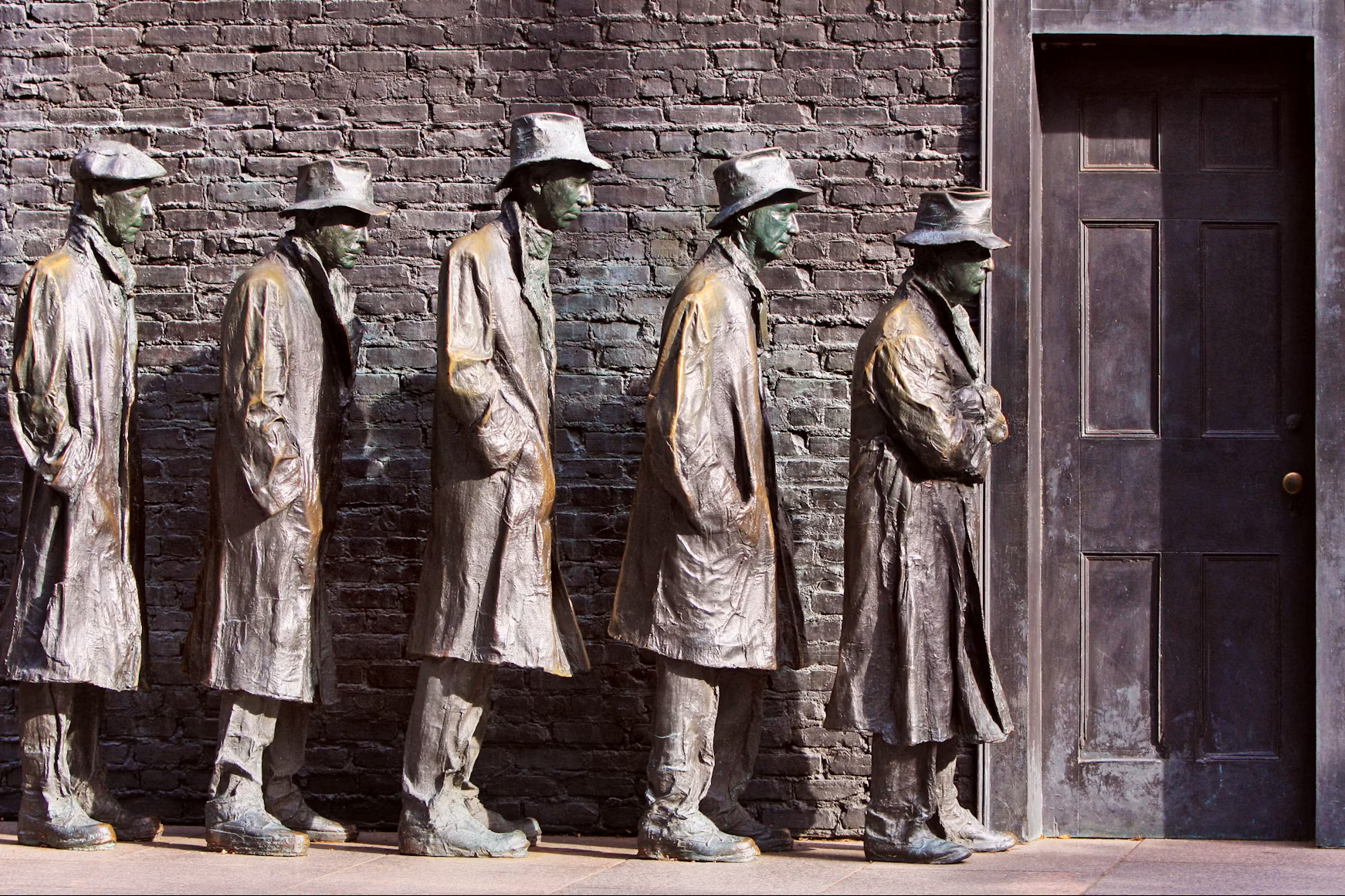
When I went back to the DMV for the last time, I was nervous about explaining to the clerk why my gender was different on my license and passport. Here I was, a trans Jorji, about to smooth talk a government employee because I knew that I was breaking the rules. As the border agent of Arstotzka, I was the one that held people’s lives in my hands: I could save them or damn them. Randomly-generated migrants are placed in front of me trying to cross the arbitrary line dividing here from there, every one of them at my whim. If someone has false documentation but begs me to let them in, telling me they will be killed if they go back, should I pity them and take the penalty or stoically turn them away? When Republian athlete Vince Lestrade shows up the morning after a story alleging he murdered his girlfriend in a “jealous rage” runs in the Truth, do I believe that he’s a killer or a falsely accused man on the run? The line between propaganda and reportage can be thin. It can be life or death for those whose names appear in newsprint.
If I helped someone else and lost pay for it, my sick family could survive without food or medicine, but only if no one was at the brink of death. And once bribes and terrorist groups became involved, breaking the rules placed my own life in danger. Could I still afford to rebel if being caught meant death? Papers, Please is an experiment about at what point, if any, you become willing to risk your own safety and comfort to help others.
As a trans American without correct documentation, I was dancing to the tune of a government that wanted to keep me moving — uncertain and afraid — until I died. They controlled the tempo, the rhythm, the melody, the length of the song: I could rest at their command. I could only hope that the woman behind the DMV desk, the maestro de jure, wasn’t transphobic or feeling crushed by the rules and regulations of the bureaucracy. I handed over my documents, passport included, with shaky hands. “The passport and the license have different genders, but the license is the real one,” I stuttered.
She nodded but didn’t seem to hear. She looked at the documents, my words rotating in her brain. I saw them click, her brows furrowed in confusion. “These are different?” It was a statement that came out as a question. As briefly and calmly as I could, I explained that the United States government refused to update my gender. She actually listened this time, her eyes focused on me.
“Is that actually happening? That’s stupid!”
Within seconds, this woman who I didn’t know started ranting about how unfair the policy was. How unsafe it was. Why should the government be able to tell me if I was a woman or not? She was a loud and efficient ally, speeding me through the rest of the Real ID application before handing my documents back to me with a smile and a wish that things get better. She was angrier than any other cisgender person I’ve seen, and I like to imagine that was because she knew the material effects of the soul-crushingly banal labor she does at the DMV. That a license can save lives as much as the lack of one can risk them. She looked at the machine she was a part of and told it to fuck off. I was grateful; I was a person; I was lucky.
The fact that, over five anxious months, I was able to obtain my name change papers, passport, and license with little interference felt like winning the lottery. At any single moment I could have had my fate placed in the hands of those with hatred in their hearts. I could have had my identity cut to pieces, yet another freak punished for existing outside the binary. I could have lost my freedom to travel, my status as an American citizen, my standing as a human being. But none of that happened. Everyone who encountered me met me with grace, or, at the very least, mundanity.
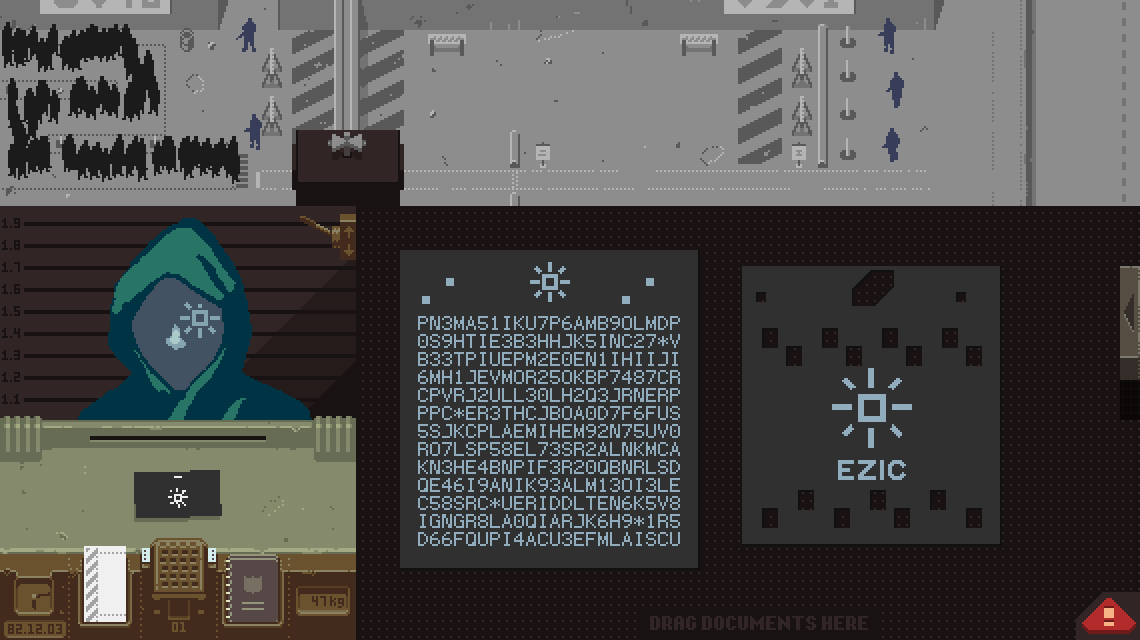
At any border, the most powerful document is a passport belonging to whatever nation sits on the other side of that invisible boundary. Arstotzkan documentation is a rare treat, an underhand pass that allows you to put down the various books and forms that clutter the station and trust your gut. We trust the Arstotzkan. They are easy to read, their love for the homeland not obscured by manufactured images or fudged numbers. They do not require a work visa or a visitor's pass, nor do they not require special seals or bribes to enter. Yet, sometimes the Arstotzkan is not an Arstotzkan; sometimes a comrade is not a comrade. Sometimes people with the correct documentation are terrorists, traffickers, or drug dealers. Sometimes the people who lie tell the truth, and those that tell the truth are lying. Sometimes you are reminded that you have no true power, that you are a puppet for an authoritarian regime who doesn’t give a shit about the common man. What do you do then?
Papers, Please has 20 possible endings, seventeen of which are fail states. Among them: you can run out of money, lose your family to illness, shoot an immigrant or guard with either a tranquilizer or sniper rifle and get arrested, partially aid the rebel group known as EZIC and be arrested or executed for helping them, or escape to a neighboring nation alone. The three remaining endings are the only ones that trigger a victory theme and the credits. It’s possible to run away to Obristan with your living family members. You can stay in Arstotzka and help EZIC succeed in overthrowing the Arstotzkan government. Or, most tellingly, you can do your job and only your job. You can ignore EZIC’s missions and bribes entirely, stop their attack with your sniper rifle, and then return to work the next day like nothing happened. Like everything is the same as it ever was. This last ending is the only one that unlocks Endless Mode, a purgatory of checking documents and sticking to the status quo. You’re replaceable, valued only by the amount of people let through the checkpoint per day. A cog stuck in an unceasing machine.
These are options given to drones within an authoritarian regime, the ones paid scraps to enforce discriminatory rules simply because they’re the rules. They aren’t revolutionaries; they’re employees who need health care, who have families to feed. Their violence is banal, enacted not with firearms but with rubber stamps. Choosing mundanity may mangle those caught between the gears of the bureaucratic machine, but the cogs get to spin undisturbed. Blood and tears only serve to lube the joints.
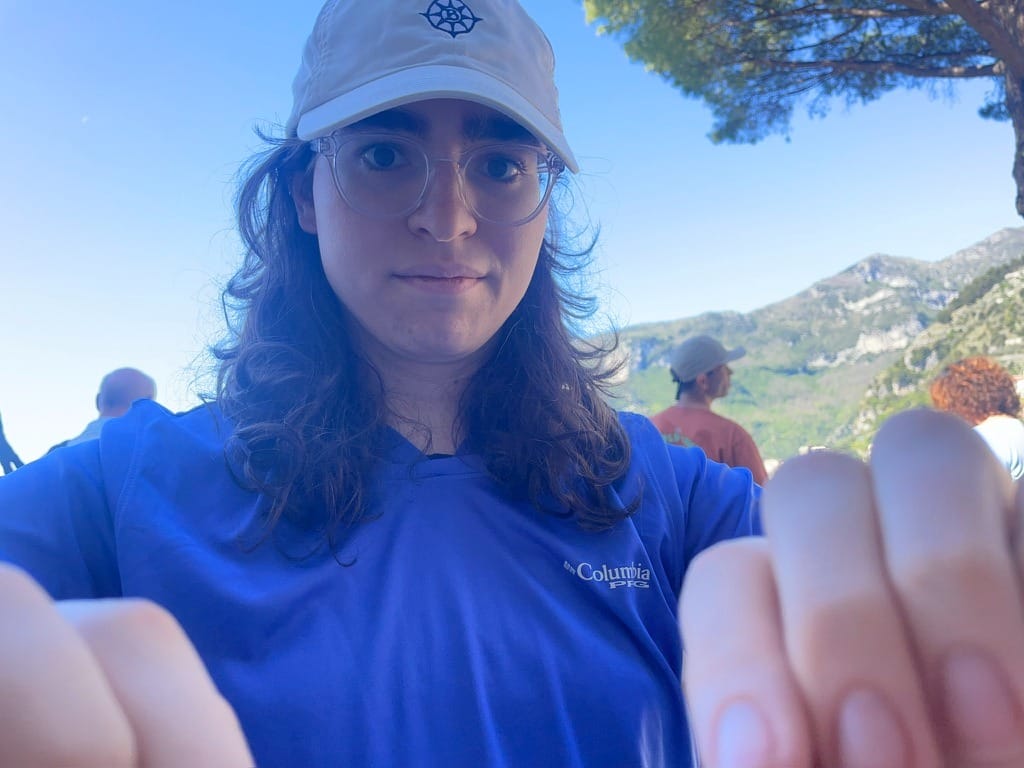
“Go in front of me,” my dad said. It was a demand, the first step of a plan that didn’t have any more beyond it. After an overnight flight, my family had arrived in Italy for a weeklong trip. We were to hike around the Amalfi Coast, the undulating hills, stark bluffs, and hundreds of stone-carved stairs. Before any physical exertion could be had, however, we needed to pass through customs. This is what we had all spent months thinking about — not the delicious food, beautiful views, ancient history, but the few moments that an Italian border guard would look at my passport and determine if I’m allowed into the country or not. I didn’t have a plane ticket home if I was turned away.
I stood in line ahead of my dad wondering what he thought he could do if the agent decided I was a liar or threat. Beg them? Bribe them? A curious, masochistic part of me wanted to hear my father try and explain transness to some bored Italian guy. What would he even say? The questions he asks me aren’t always those of someone who understands, but he supports me strongly and loves me deeply anyway. The line moved slowly. I took my time feminizing myself however I could: ponytail pulled tight, hat brim raised on my head to let bangs through, sleep wiped from my eyes, sweatshirt ruffled to show breasts. I ran through small vocal exercises, raising the pitch of my voice in anticipation of answering questions.
When it was finally my turn to hand over my passport, the agent looked at it, looked at me, stamped a page, and handed it back. The entire process took less than two minutes. All my family’s fear and anxiety was deflated by a quick glance from a guy simply doing his job. I’m sure I was asked questions about my trip, but I don’t remember. That’s how banal the interaction was.
This wasn’t Ireland, where I had to argue with the agent. This wasn’t Germany, where a male and female agent argued about who should pat me down in the security line before eventually asking who I preferred. There was no conflict between whether to call me uomo or donna. My gender didn’t matter. I wasn’t a danger, a menace, or a freak: I was a tourist excited to eat fresh pasta and experience nature, a girl who wanted rose gelato and would fight against motion sickness on the drive to Pompeii. When your personhood is so heavily debated and demonized, it’s nice sometimes to be treated as a regular, boring person. It’s a gift.